
Every retrofit project tells a story, such as the undiscovered ductwork behind walls, old equipment that can no longer match the current demand and buildings that are anticipated to do better without being built again. The ability to translate mechanical load requirements into realistic costs is one of the most important hurdles in this process, even though selecting the HVAC system is not a trivial task either. An innocent error of a few percentage points in the sizes of the loads may silently lead to oversized equipment, bloated budgets, energy wastage and expensive change orders in the future of the project.
This is why the direct linkage between HVAC loads and retrofit costs is no longer a technical task. It is a strategic benefit to the contractor, estimator and project stakeholder who desire reliable, predictable budgets, smart upgrades and retrofit decisions that truly stand the test in the field.
Why HVAC Load Cost Estimation Is Critical for Retrofit Projects?
Retrofit HVAC projects are not always easy. Unknown conditions, degrading systems and design constraints are behind walls and ceiling which is not the case with new buildings. This uncertainty turns out to be one of the most crucial and risky elements of retrofit planning, HVAC load cost estimation. Even the best intentions of upgrades can soon become a cost-busting initiative without a good grasp of loads and their effect on costs.
Retrofit HVAC Estimating is More Complex Than New Construction
The new construction HVAC systems are built on the ground floor with exact drawings, established occupancy, and foreseeable layouts. Retrofit projects have to be done in circumstances where old ductwork, mechanical constraints, and outdated documentation must be worked around. The alteration of building use, tenant density or energy code can greatly modify load requirements. Still, these are not usually considered when making initial estimates.
This is where established approaches to HVAC load calculation methods become essential. They are used to assist estimators in the transition between the paper and the real worlds and minimize assumptions that can cause costs to swell in the future.
Hidden Conditions and Outdated Systems Drive Cost Uncertainty
One of the most common reasons for retrofit cost overruns is an uncovered occurrence of concealed conditions during the course of work. Last-minute changes can be driven by undersized air handlers, dilapidated ductwork, insufficiency of electrical capacity or improperly insulated building envelopes. These latent problems become directly translated into unwanted costs when the estimate of HVAC cooling load calculation is either oversized or undersized.
The US Department of Energy states that commercial HVAC systems consume about 40-60% of the total building energy use and so are one of the highest cost and performance drivers in any building retrofit project.
It is such a significant effect of energy that a miscalculation in the loads of small proportions could have financial implications not only at the time of installation but also across the system’s life.
Poor Load Assumptions Lead to Cost Overruns
When estimators rely too heavily on assumptions or old rules of thumb, HVAC systems tend to be oversized in the attempt to be safe. Although this can be considered as a conservative measure, in many cases it leads to a higher cost of equipment, labor and long-term low energy efficiency. Conversely, proper load estimation facilitates the selection of equipment wisely and budgets that are controlled.
Fast HVAC estimating strategies can come in handy when the initial planning is involved. Still, they should never be used in place of validation. Retrofit projects require efficiency and accuracy where loads are calculated in reality, costs predicted, and surprises reduced to a minimum in advance of the construction.

Understanding Mechanical HVAC Loads
In the case of retrofit HVAC projects, mechanical loads are the basis on which cost estimation can be done accurately. Even the most seasoned estimators would not succeed in estimating system requirements without a clear understanding of BTU, tons, and airflow (CFM), which will result in oversized equipment, inefficient use of energy, and unnecessary costs. Break it down so that it is practical, relatable and one that can be applied in real life.
What BTU/hr Really Means in Retrofit Projects?
British Thermal Unit (BTU) is used to measure the amount of energy needed to warm one pound of water by one degree Fahrenheit. It is used to describe in HVAC terms, amount of heating or cooling that a given system can offer. You need to know what BTU means since it will enable you to convert the area of the building and occupancy to the capacity appropriate system in retrofit projects, .
Pro Tip: In commercial properties, even the smallest miscalculation of loads of 10-15% can raise energy use by 12% every year based on energy use reports in the industry.
Converting BTU to Tons and Why It Matters?
Tones have become the standard in the HVAC industry because 1 ton=12000 BTU/hr. The use of tons allows the standardization of the size of the systems across the vendors and uses of equipment that would enable easier comparisons of equipment. The accurate conversion of BTU to tons is vital in the retrofit estimating, as any misconversion would lead to over-sizing of a system, which leads to high initial costs and operating costs. This simplified calculation will eliminate unexpected costs of the budget and will guarantee the adequate sizing of equipment to the specific conditions of the building.
For example:
- A small office requires 36000 BTU/hr
- 36000 ÷ 12000 = 3 tons of cooling capacity
Understanding Airflow (CFM) in Relation to Tons
Airflow, which is expressed in CFM Cubic Feet per Minute is used to make sure that conditioned air is discharged to its efficient points in the building. The overall guideline is 1 ton ≈ 400 CFM. Correct calculation of air flow not only affects comfort but also affects the duct size, choice of fan, and energy consumption.
Example: when using a 5-ton retrofit system typically requires 5 × 400 = 2000 CFM. Calculating this improperly will lead to noisy systems, hot spots or cold spots and wastage of energy.
Bringing It All Together: Area → BTU → Tons → Cost.
The magic about HVAC load calculation techniques is that estimators can relate building size, energy needs, and airflow to real cost projections. Complex conversions can be simplified with the help of infographics and visual guides with area to BTU, tons to cost and planning retrofitting can become accessible to both teams and stakeholders of the project.
Wth these basic conversions, retrofit estimators will have the confidence to convert mechanical loads into accurate equipment sizing, correct labor estimates, and precise budgets without falling into the same trap as many others do of artificially increasing costs.
Simple and Proven HVAC Load Calculation Methods for Retrofit Jobs
A successful retrofit project is largely dependent on achieving accurate estimates of HVAC loads. When the appropriate approach is utilized, systems are neither oversized nor undersized, and unnecessary costs are avoided, resulting in confidence in budget predictions. Three convenient techniques commonly employed by professional estimators are listed below, along with their uses, risks, and effectiveness.
Method 1: Rules of Thumb HVAC Load Estimation
The quickest method of obtaining a ballpark estimate of HVAC loads is by the rules of thumb, particularly at earlier project budget stages. Such techniques have a range of BTU per square foot that is based on the type of building:
- Offices: 20-30 BTU/sq ft
- Retail Spaces: 25-35 BTU/sq ft
- Warehouses: 15-25 BTU/sq ft
Accuracy Level: Low to moderate
This method provides a rough estimate but should never be used for final equipment sizing.
When to Use:
- Initial project planning
- Quick budgeting for feasibility studies
Risks:
- Over or undersizing HVAC units
- Potential energy inefficiencies
- Misaligned budget expectations
Estimator Warning: Rules-of-thumb can be drastically inaccurate, on average, by 10-20% when compared to the accuracy of detailed calculations, and when it comes to thousands of dollars of extra costs, this error can be painful.
Method 2: Area-Based BTU Load Calculation (Improved Accuracy)
To get more credible estimates, area-based BTU calculations are a compilation of building size and certain energy demands. An example of a step-by-step commercial retrofit case is as follows:
- Building Area: 10000 sq ft
- BTU Requirement: 25 BTU/sq ft
- Total Load: 10000 × 25 = 250000 BTU/hr
- Convert to Tons: 250000 ÷ 12000 = ~20.8 tons
Additional Considerations:
- Climate zone: Heating or cooling degree-days affect the load
- Occupancy: Higher density increases cooling requirements
- Equipment efficiency: Higher SEER/AFUE ratings may reduce required tons
Method 3: Simplified Load Modeling for Retrofit Estimating
Simple load models simplify the estimator to take into account climate, building envelope and occupancy patterns without doing an entire engineering calculation. The technique is especially helpful in cases of commercial retrofits that are intermediate in size and have time and resource constraints.
Key Features:
- Adds in adjustments of degree-days to the local climate
- Accounts for seasonal variations and occupancy patterns
- The estimate is more realistic than the rules of thumb
Accuracy Comparison:
- More accurate than rules of thumb.
- Slightly less precise than full engineering models, but sufficient for most retrofit planning
| Method | Description | Accuracy Level | When to Use | Risks / Considerations |
| Rules-of-Thumb HVAC Load Estimation | Uses BTU per sq ft ranges by building type | Low to Moderate | Early budgeting/feasibility studies | Over/under-sizing, energy inefficiency, and inaccurate budgets |
| Area-Based BTU Load Calculation | Calculates total BTU from building area and converts to tons | Moderate to High | Small to mid-sized retrofits, more precise planning | Requires correct area, occupancy, and climate adjustments |
| Simplified Load Modeling | Uses climate, degree-days, and occupancy to estimate load without a full engineering study | High (estimator-level) | Mid-sized commercial retrofits, time-sensitive projects | Slightly less precise than full engineering models; needs validated assumptions |
Translating HVAC Load Calculations Into Retrofit Costs
It is one thing to understand HVAC loads, but to work out the costs of retrofitting them into reality is where estimating expertise comes into its own. Being able to correlate BTU, tons, and airflow to the price with accuracy enables contractors and building owners to make sound decisions, prevent budget surprises, and make retrofit projects a certainty. We will discuss viable cost standards and comparisons.
Average HVAC Retrofit Costs by System Type
The prices of retrofit differ with the type, size, and complexity of the system. Here’s a realistic breakdown:
| System Type | Typical Installed Cost |
| Central HVAC | $5000 – $12000 |
| Heat Pump | $6000 – $14000 |
| Commercial RTU | $12000 – $40000+ |
Cost Per Square Foot Benchmarks for Retrofit HVAC Projects
To estimate the planning fast, the cost per square foot can be a convenient measure of a commercial retrofit project. Typical ranges are:
$15-$50 per sq ft, depending on the type of system, complexity, and the condition of the building.
Example: An estimated cost of the HVAC in a 10000 sq ft office retrofit for $25 per sq ft would be approximately $250000.
Heat Pump vs Traditional HVAC Retrofit Cost Comparison
Upfront cost distinction, when choosing a system, will have serious effects on ROI and lifecycle planning:
| System | Median Installed Cost |
| Heat Pump | ~$8027 |
| Traditional HVAC | ~$5096 |
| Cost Difference | ~58% higher for heat pumps |
Start Your Accurate HVAC Retrofit Estimate Today
Common Estimating Mistakes That Inflate Retrofit HVAC Costs
Simple but expensive errors can be used to negate the heat load calculation of HVAC, even when it includes the most meticulous calculations. According to experienced estimators, these pitfalls are frequently what can be used to determine the difference between a successful retrofit and a budget blowout. We can not only learn lessons by pointing out these errors but also reveal practical experience, which is a key EEAT indicator that Google values.
Oversizing Equipment
One of the most common mistakes when retrofitting a project is the oversizing of HVAC units. Although it is tempting to have a few extra units installed to be on the safer side, and oversizing equipment tends to result in:
- Higher upfront costs
- Short cycling reduces efficiency and equipment lifespan
- Increased energy consumption
Tip: It is always important to match the unit size with the correctly calculated BTU and tonnage needs rather than simply use the rules of thumb.
Ignoring Duct Reuse Costs
Reuse of the already available ductwork can be cost-effective, but neglecting duct conditions, insulation, and routing may be counterproductive. This decision to disregard these costs can result in:
- Unexpected labor and material expenses
- Poor airflow and comfort issues
- Compromised system efficiency
Professional estimators check the ductwork that is currently in place before they complete load and cost calculations to avoid any surprises.
Missing Electrical Upgrades
Common pitfalls include the fact that HVAC retrofitting may at times demand electrical service upgrades that are not difficult to disregard. Not considering such items during early estimates may result in budget overruns and project delays. Common mistakes include:
- Underestimating required breaker sizes
- Ignoring wiring upgrades for new equipment
- Overlooking code compliance costs
No Contingency for Unknowns
All retrofit projects have a degree of uncertainty, such as undiscovered conditions, unexpected maintenance or outdated parts. Failure to add a contingency buffer to your estimates usually brings you to:
- Emergency expenditures
- Schedule disruptions
- Frustrated clients or building owners
Rule of Thumb: A simple but successful method of defending project budgets is to include a contingency of 5 10% of the total budget.
How Professional HVAC Estimators Improve Retrofit Accuracy?
In the case of retrofit HVAC projects, accurate load calculations can either break or make your budget and schedule. Although you can always use DIY estimates or quick rules-of-thumb because it appears convenient to do so, resorting to professional estimators can guarantee that all the details, including mechanical loads to cost projections, are thoroughly checked. This is a method of minimizing risk, but it also contributes to smarter decision-making during the project lifecycle.
Reduce Risk and Avoid Costly Surprises
All retrofit projects are equipped with years of experience and industry expertise by professional estimators. Before it becomes a costly problem, they foresee those kinds of problems as hidden challenges in the form of undersized ductwork, electrical upgrades, or those adjustments that are climate-specific. The effective method of estimating mechanical costs enables the stakeholders to make good budget plans without experiencing any unwanted surprises and budgetary delays.
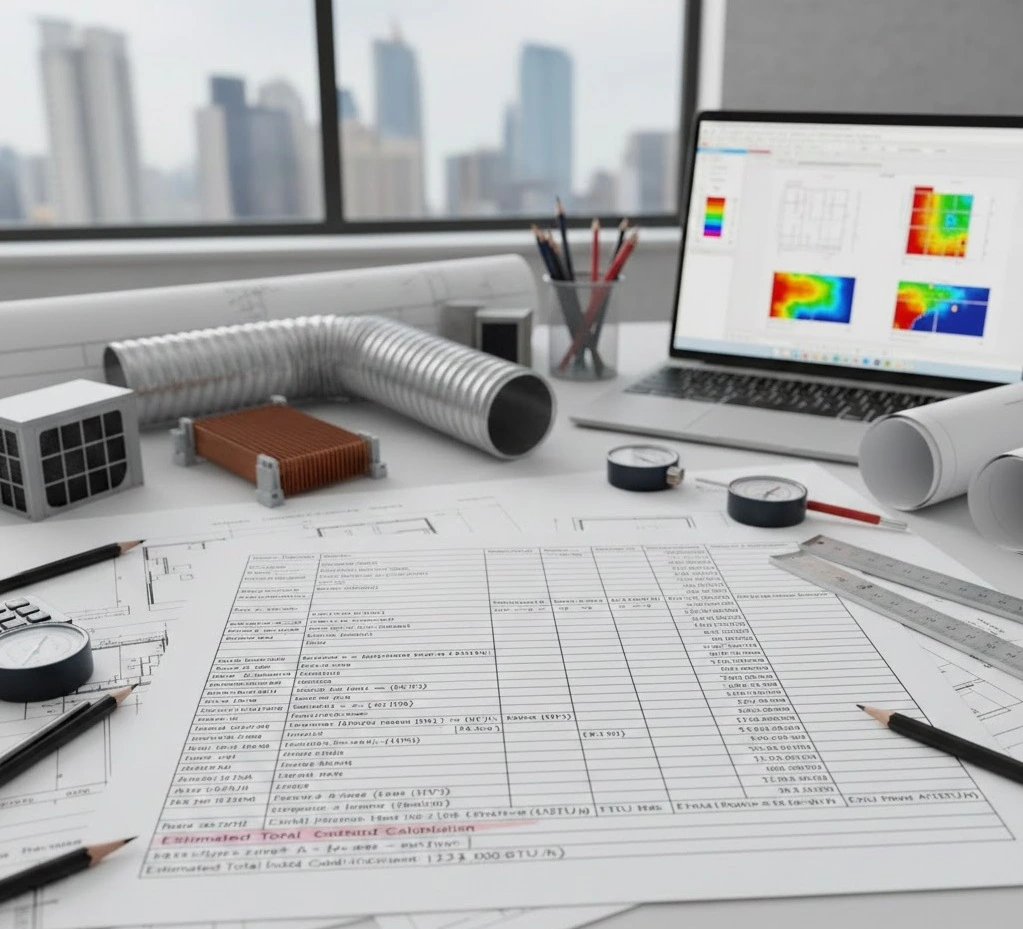
Improve Bids and Maximize ROI
Proper calculations of the loads are directly translated to accurate bids, where the contractors are able to provide competitive bids without underestimating the bids. When retrofit HVAC cost breakdowns are matched with actual load data, estimators are able to ensure that systems are well-sized, lowering energy wastefulness as well as enhancing ROI in the long-term. In the case of building owners, it implies reduced operating expenses and improved system performance in the long-term.
Soft Mention of Services
Although any project may enjoy the benefits of in-depth estimating experience, professional HVAC estimators are an added component of efficiency and consistency. Their process integrates expensive calculation of loads, cost benchmarking and risk avoidance, like a cost-effective way to ensure your retrofit project remains within the budget, schedule and industry standards.
Conclusion
Accurately estimating heat load calculation of HVAC for retrofit projects is more than just crunching numbers to make informed decisions, budget control, and efficiency of the systems with a retrofit project. Based on knowledge of BTU, tons, and airflow usage of proven calculation methods and conversion of those loads into realistic costs, each of the steps is vital to the success of a project.
The elimination of common errors, the usage of professional experience in estimating costs, and thoughtful assessment of cost trade-offs will guarantee the successful operation of retrofit projects and a long-term payback.
As a contractor, building owner, or estimator, the ability to master these strategies can provide you with a competitive advantage. Lower risk and ensure you can come up with predictable and reliable results all the time.
Ready to make your HVAC retrofit estimates a step higher? Combine experience, technical accuracy, and real-world understanding with partner professional estimators to make your projects efficient, cost-effective, and hassle-free. Contact Estimations today and get to work optimizing your retrofit budgets.
FAQs
What is the average cost of retrofit projects of HVAC on a per-ton basis?
Retrofit HVAC installation costs are usually between $500 to $1000, depending on the type of system, complications in the building, and its location. To illustrate, a 20-ton system will cost between $10000 and $20000 to take the standard commercial retrofit. Proper calculation of loads will make the system the right size and will not require more money than is needed.
How accurate are HVAC load rules-of-thumb for retrofit jobs?
The rules of thumb offer an easy estimate, yet are not that good. They are generally varied by 10-20% with respect to detailed calculations, and this may mean oversizing or undersizing of equipment. They are only applicable when the budgeting or feasibility is still in the initial stages. In contrast, professional load calculation should be used in the final estimates.
Why are retrofit HVAC projects more expensive than new installations?
Retrofit projects are also complex by nature since they have to be fitted around previous systems, ducts, electrical constraints and building constraints. Retrofit costs could be higher than new constructions due to the hidden conditions, outdated equipment, and the necessity of customized solutions, which tend to add labor, materials and time.
What is the effect of wrong load calculation on the budgets of HVAC retrofit?
A wrong calculation of loads may result in disproportionately big or small systems, which may result in more up-front expenses, more energy consumption, inefficient working, and more frequent maintenance problems. A 10-15% miscalculation may have great long-term financial consequences on both the cost of installation and the operational cost.
What are the undocumented expenses that must be factored into HVAC retrofit estimates?
These costs should be added to initial estimates because they help to reduce budget variations and project surprises.
Key hidden costs include:
- Electrical augmentation of new equipment.
- Duct alteration/ replacement.
- Insulation improvements
- Unexpected building conditions and repairs contingency.
