
You are asking about the cost to install an HVAC system in 2026. This means you are working on this project and struggling with budgeting. This year, the prices of materials and labor are both increasing due to current world conditions.
Whether you talk about HVAC or ductwork, requirements, including materials, equipment, and labor, are all on the high end. This means that missing even a single line item can cost you more than ever this year.
What you can do now is to know the cost to install an HVAC system with a complete expense breakdown, which is only possible with a precise and accurate estimation. Let’s dive into the depths of HVAC system installation cost in 2026, taking a start with its average in the US.
Average Cost of HVAC System Installation
| Scenario | Typical Cost | What It Includes |
| Low end | $5,000 | Basic replacement scope with limited duct changes. |
| Average | $7,500 | Typical replacement with standard labor and setup. |
| High end | $12,500 | Larger systems, more labor, and added controls. |
| Extended high | $22,000 | New ductwork, HEPA filtration, and extra features. |
What Factors Affect the Cost of HVAC System Installation
Every HVAC project changes the expense, depending on cost-affecting factors, which are discussed below.
● Type of HVAC System You Choose
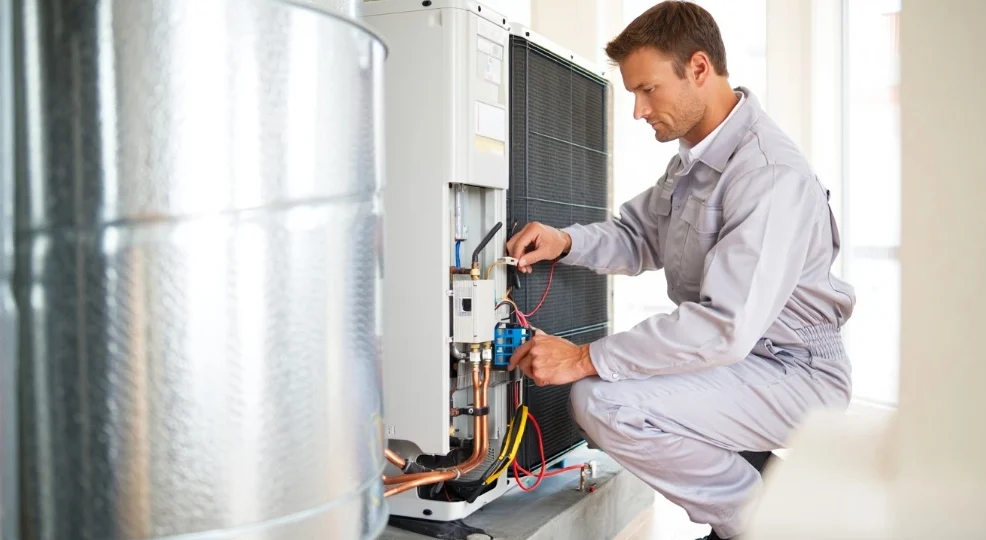
The type of HVAC system you choose drives the starting point. Central air and furnace combinations usually price differently from heat pumps, ductless mini-splits, rooftop units, or packaged systems. See the table below for the precise cost range:
| HVAC System Type | Estimated Cost | Good For (Projects) |
| Central Air Conditioning System | $3,500 – $7,500 | Residential |
| Ductless Mini-Split (per zone) | $2,000 – $5,500 | Residential |
| Rooftop Unit (RTU) | $6,000 – $15,000 | Commercial |
| Custom Air Handlers | $50,000+ | Large Commercial/Industrial |
The table shows that there is a big gap between different HVAC systems. Therefore, you must start with the right system selection to avoid money waste.
● System Size & Capacity
HVAC system size and capacity matter a lot, particularly when it comes to affordable installation. A unit that is too small never catches up, while a unit that is too large has short cycles and wastes energy. Either mistake can damage comfort and increase rework.
When it comes to estimation, this means load calculations are not optional. Manual J results show what the building needs, helping you stop guessing. That one document can save money on equipment, labor, and change orders.
● Efficiency Ratings (SEER/AFUE)
HVAC system efficiency ratings also push the price up or down. Higher-SEER and higher-AFUE equipment usually costs more at purchase, yet it can reduce operating waste. That tradeoff matters on projects with tight energy targets or long owner-hold periods.
The right choice depends on climate, utility rates, and the client’s payback window. And in 2026, efficient equipment also matters because rebates and incentives usually favor better-rated systems.
● HVAC System Installation Complexity & Ductwork
The HVAC system’s installation complexity and ductwork can change the whole project budget. Straightforward changeouts are easier to estimate than jobs with attic runs, wall chases, soffit work, or demolition. See the table below for the cost range for different scopes:
| Ductwork Type | Cost per Linear Foot (Installed) |
| Residential Ductwork | $15 – $25 |
| Commercial Ductwork | $25 – $45 |
Considering the table, you must focus on field access, duct layout, insulation, and balancing requirements during takeoff. This will ensure easy routing and ultimately professional bidding.
● Local Labor Rates
Local labor rates hit the estimate hard. Residential HVAC installs often need 8 to 16 labor hours, while commercial work can take 40 to 80 hours or more. See the table below for the location-based labor wages.
| Labor Market Type | HVAC Labor Cost (Per Hour) |
| Metro/Urban Markets | $45+ |
| Non-Union Areas | $25 – $35 |
This means that even the same scope can fluctuate based on where the project is and who performs the work.
● Regional Factors
Regional factors shape both HVAC system price and installation schedule. Hot climates raise cooling demand, while cold climates increase heating loads. Furthermore, remote sites carry freight, staging, and travel burdens that never show up in equipment brochures. Material supply, fuel costs, and climate severity all change the final expense of the project. Therefore, you must always consider regional rates instead of national prices.
● Zoning & Controls
Zoning and controls add another layer when you talk about an HVAC system installation cost. Basic thermostats keep the price light, but multi-zone controls, dampers, sensors, and automation increase the budget significantly.
For residential HVAC zoning, you have to pay $1,500 – $8,500 this year. In addition, the more zones you add, the more commissioning and balancing you need, which is not a small detail at all. It can affect both labor and startup time.
● Site Condition
Site conditions matter a lot when you consider the cost of an HVAC system installation. You know that an open mechanical room is easy. However, a tight retrofit with limited access is not. Furthermore, ceiling height, roof loading, slab condition, shaft access, and demolition all affect labor cost.
Therefore, teams should read the drawings perfectly to ensure that the site is ideally ready for system installation. If you ignore this, this will add both labor and materials expense to your project budget.
● Permit Needs
Permit needs can add cost and delay when your focus is on HVAC setup. Electrical upgrades, gas permits, mechanical permits, and inspections all carry fees and timing risk. Some jobs also need coordination with fire alarms, structural review, or utility sign-off.
Get a custom HVAC quote and plan your install with confidence.
Those items look minor during preconstruction and estimation, but they can stop a team on site. Thus, you must start with a comprehensive estimate that carries permit costs early, so the budget does not get out of control during installation.
Tips to Keep the HVAC System Installation Cost As Low As Possible
Cutting corners is not the solution. You must rely on the following tips to save maximum on an HVAC system installation project.
● Choose the Right Size HVAC System.
This is the cheapest way to avoid future cost overruns. Oversized systems cost more upfront and often cycle too fast. However, undersized systems struggle, run longer, and wear out sooner. Manual load calculations will help you protect the budget and the building at the same time.
● Prefer Energy-Efficient Models
Prefer energy-efficient HVAC models when the payback works. Higher efficiency can raise the bid a little, but the owner often recovers value through lower energy use. The bigger point is risk control. Efficient equipment usually fits better with incentive programs, and it can strengthen your proposal during value engineering.
● Get Multiple Quotes
Get multiple quotes, but compare scope, not just price. A cheap number with missing ductwork, weak commissioning, or no permit allowance is not a good one. You must ask each vendor to translate each piece of equipment, labor, startup, controls, and exclusions. That will keep bidding up while avoiding false savings.
● Schedule Installation During Off-Peak Seasons
Schedule during off-peak seasons when labor is easier to find. Summer emergency demand usually increases prices, and other seasons often give better access to installers, faster lead times, and less schedule pressure. That automatically lowers labor demands.
● Look for Special Promotions and Discounts
Rebates on new HVAC systems can reduce the owner’s net cost, even if the sticker price is firm. Carrier, Lennox, Trane, and local utilities all run offers at different times. When considering this option, keep an eye on the documentation. If the paperwork is weak, you will never benefit from the rebate offered.
● Install a Smart Thermostat
Do that only when the project justifies it. It costs far less than a full control package, and it also improves comfort and scheduling. Moreover, that small upgrade can support better energy management, especially on projects where the owner wants simple optimization without heavy automation.
● Financing, Rebates, and Timing
Your mind must be popping up a question: Can you finance a new HVAC system? In most cases, yes. Owners often use home improvement loans, home equity loans, HELOCs, or dealer programs. The best way to finance a new HVAC system depends on credit, schedule, and whether the owner wants fixed payments or flexible terms.
Note: New HVAC system financing works best when the payment plan matches the project cash flow, not just the sticker price.
As of April 2026, federal efficiency credits remain tied to earlier installation windows. So contractors should verify current eligibility before they promise savings in the proposals.
● Start With HVAC Estimation
Start with HVAC estimation before anybody orders equipment. That is the best way to control scope issues, budget and time overruns.
When the estimate starts with takeoff, labor, and load logic, the team sees where the money goes. You also catch missing accessories early, which lowers the odds of HVAC system repair later and helps protect margin.
How to Calculate the Cost to Install an HVAC System?
Step 1: Calculate the load of the building.
Start with square footage, envelope quality, occupancy, internal heat gains, and climate. You can find the base number using Manual J or comparable load work. This will make your initial estimates solid.
Also read: Proven HVAC Load Cost Calculation Techniques for Accurate Retrofit Estimating.
Step 2: Select equipment type and system efficiency.
Choose the system that fits the load, the climate, and the owner’s operating goals. This is also where the best HVAC system becomes a project-specific answer. A unit that looks cheap on paper may cost more over the full cycle. So, be selective here,
Step 3: Evaluate ductwork requirements.
Count the linear feet, turns, transitions, hangers, insulation, and access limitations. Residential ductwork cost at $15 to $25 per linear foot installed, while commercial work ranges from $25 to $45. Consider these points: that detail changes the budget fast, especially on retrofits.
Step 4: Calculate labor and installation costs.
Consider the team size, the hours, the local wage rate, and the complexity of the startup. During this phase of estimation, play with project timelines to ensure that your project completes on time.
Step 5: Account for additional costs.
Add permits, electrical work, controls, startup, balancing, disposal, and commissioning in the assessment. Make sure you leave room for contingencies, especially when drawings are incomplete. Last, add all expenses to get the total cost of the project.
How does HVAC Cost Estimation Benefit Contractors?
Contractors do not hire cost estimators just to save typing time. They do it because estimating quality affects the whole job. Let’s see how HVAC estimating benefits a contractor/subcontractor.
● Cost Control
When the takeoff is accurate, you see where every dollar goes. That visibility helps you cut waste before it turns into an overrun. It also makes value engineering easier, because you can compare alternatives with the right estimates instead of guesses.
● Reduced Budget Overruns
A detailed estimate catches duct changes, control packages, permit fees, and equipment revisions early. That matters in fast-track work, where even a small miss can force a change order. It is easier to protect the margin before the bid goes out than after the job starts.
● Increased Profitability
When labor, materials, and equipment are estimated with precision and accuracy, the bid stays competitive. In the results, the contractors win work while leaving room for profit. And that balance keeps the construction business flying.
● High Bid-Win Rate
Project owners and GCs notice when an HVAC set is well-coordinated. They also notice when an estimate looks inaccurate. This means a transparent estimate supports trust, enabling you to win more work efficiently.
● Significant Time Saving
- Detailed cost budget estimating takes hours, but it saves days of rework later.
- Teams can move faster when the scope is clear, and the quantities already line up.
- That speed lets contractors answer more invitations without sacrificing quality.
● Reduced Errors & Change Orders
Missed duct fittings, wrong equipment selections, or loose labor assumptions turn into project delays later. With accurate estimates, contractors lower the odds of those mistakes and also support transparent handoff to procurement and project management teams.
● Better Resource Management
Better resource management is the big gain in bidding. When estimators know the full set, they can plan labor, materials, and sequencing better. This ensures that laborers stay busier, deliveries arrive on time, and the schedule holds together longer.
What if You Don’t Have Time for HVAC Estimation? (Common Issue in Contractors’ Life)
Then, outsourcing is the way to go. A seasoned estimator handles takeoffs, labor checks, and scope review while your team keeps building and bidding. That job splitting makes more sense than hiring permanent estimators who increase the overhead.
Below are some benefits of outsourcing an HVAC estimator:
- Cost efficiency: You avoid salaries, benefits, training, and software subscriptions. You pay per project, so overhead stays at the lower end.
- Increased accuracy and reduced risk: Expert estimators use current software and market data to reduce duct takeoff mistakes, sizing errors, and waste.
- Faster turnaround times: External support delivers estimates quickly, which helps you answer more RFPs and meet tighter project deadlines.
- Specialized expertise: You get local code knowledge, current pricing, and trade-specific judgment without having that skill in-house.
- Focus on core operations: Your internal team can stay on project delivery, client communication, and field coordination.
- Scalability: You can ramp support up for bid seasons and slow it down when the pipeline softens.
Conclusion
HVAC system installation pricing in 2026 depends on load, equipment, ductwork, labor, controls, and site conditions. A low quote means little without scope detail, while a strong estimate protects margin, shortens review cycles, and helps the owner make an informed decision. It also keeps HVAC system maintenance planning visible before handover, which reduces surprises later. And when the estimates are calculated properly, HVAC system repair becomes a smaller risk after turnover.
Estimators help contractors make that move with more confidence. Their HVAC estimating services, mechanical estimating solutions, and retrofit load-cost support give contractors, builders, and design teams a tighter path from drawings to bid.
If your project needs sharper pricing and fewer blind spots, connect with our construction estimating services and keep the next HVAC system installation bid grounded in accurate estimates!
FAQs
Why is there a need for an HVAC system in a building?
It keeps the building temperature, ventilation, and humidity under control, which protects comfort and indoor air quality. It also supports code compliance and equipment performance. Without it, the building becomes harder to use and more expensive to operate.
What HVAC system size is standard in the US?
There is no single standard size, because loads vary by climate, envelope, and use. The right size comes from a load calculation. Therefore, the same square footage can require very different equipment.
What to look for when outsourcing an HVAC estimator?
Look for trade experience, a training takeoff process, local pricing knowledge, and software expertise. Also, ask for sample deliverables and turnaround time.
How long do HVAC estimators take for project cost estimation?
Simple scopes can move quickly, while complex commercial or retrofit projects take longer. Many small estimates finish in a day or two, while Bigger projects need more time for review, quantity takeoff, and cost estimation.
