
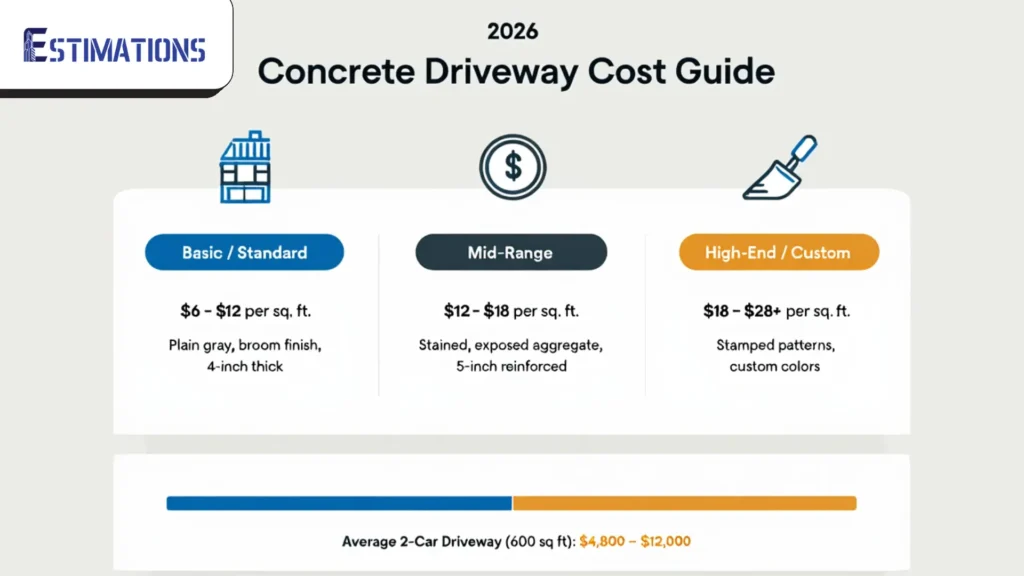
Suppose you are bidding on a driveway concrete sealing project while feeling that the estimates are off. This means you are risking your margin plus time. Your bid must contain solid estimates for each element of the concrete sealing job, so you can get what you expect in the profit.
In this guide, we will break down the 2026 cost to seal a concrete driveway, plus explore factors that drive the project cost. Let’s start!
Average Cost to Seal a Concrete Driveway
In the US, most driveway sealing costs between $1,350 and $3,500 in 2026. According to a report, a project owner pays around $1.50 per square foot on average for a standard 1,000 sq ft area. For only materials, sealing cost ranges from $0.10 to $0.75 per sq ft, with labor increasing the total to $1.35–$2.50 per sq ft.
See the table below for clear cost data.
| High End Cost | $3,500 |
| Low End Cost | $1,350 |
| Average | $2, 425 |
Note: These figures include basic prep and one or two coats. But actual bids will vary once you factor in access or repairs.
What Factors Can Affect the Concrete Driveway Sealing Cost?
Several elements bring your final expense up or down. Size matters most, but condition, sealer choice, and location play big roles too. Understanding them will help you estimate accurately and protect your profit. So, let’s start!
● Project Location
Climate and region significantly affect the driveway concrete sealing cost. Coastal humidity demands better moisture resistance, while Northern freeze-thaw cycles need stronger penetrating protection. Depending on these specifications, the cost of sealing fluctuation from location to location.
See the table below for a concrete sealing cost of a 500 sq driveway in 2026.
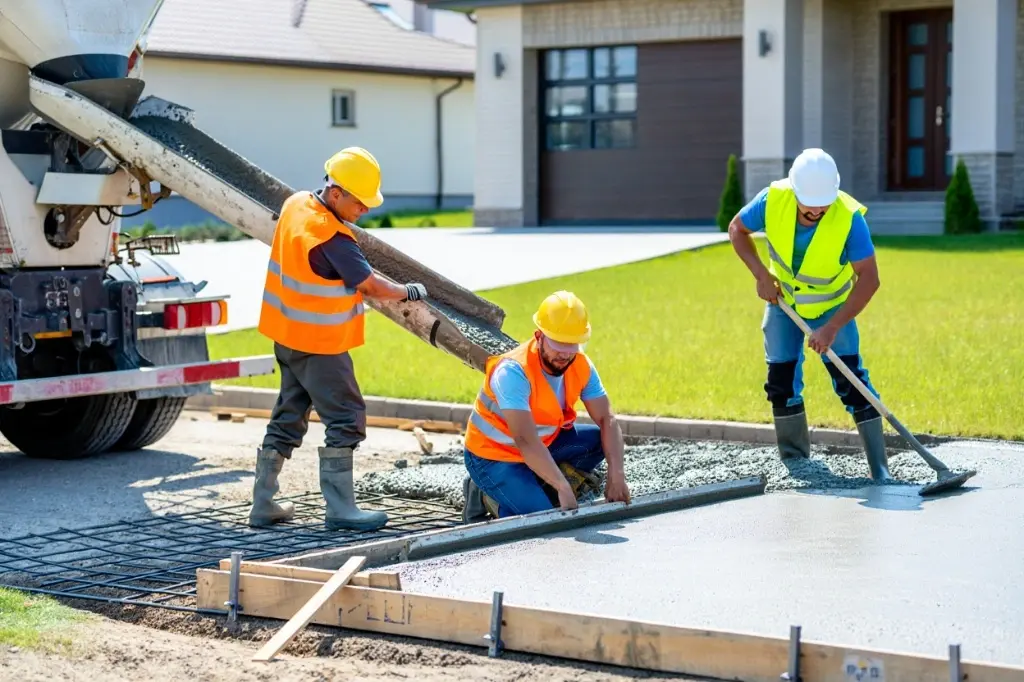
| Location | Est. Cost Range |
| Austin | $650–$1,350 |
| Alaska | $900–$1,800 |
| California | $800–$1,600 |
| Texas | $600–$1,200 |
| Florida | $650–$1,300 |
| Washington | $750–$1,450 |
● Local Labor Wages
Labor makes up $0.70–$1.75 per sq ft in a driveway concrete sealing job. On average, it is around $1.25 per sq ft. Remember that high-demand areas or union zones bring higher rates. Also, the busy seasons increase the labor costs. Therefore, you must tie your bids to local realities so you stay competitive, keeping your margins up.
● Driveway Size
For large projects, fixed costs (like driving trucks to your house, setting up equipment, and cleaning up) are spread out over a large area, making the price per square foot lower. Small jobs have the same setup costs, but fewer square feet to cover them. Contractors often have a minimum charge just to show up, which makes the cost per square foot higher.
See the table below for sealing costs of different-sized driveways.
| Driveway Type | Driveway Size | Est. Cost Range |
| 1-Car Driveway | 10–12 feet wide by 18–20 feet long (about 180–240 sq ft) | $270–$600
|
| 2-Car Driveway | 20–24 feet wide by 20–24 feet (400–576 sq ft) | $675–$1,500
|
| 3-Car Driveway | 24 feet wide by 30–36 feet (720–864 sq ft) | $1,080–$2,400 |
Note: Local regulations mostly require minimum widths, limit curb openings, and demand 3–5 foot setbacks from property lines. Check codes early so you avoid change orders.
● Accessibility
A tight access area increases the costs of driveway concrete sealing since you need to deal with surfaces, gradients, width and turning radius, transitions, parking, and lighting systems. In 2026, it can add $0.30–$0.80 per sq ft to the project total.
Going in depth, steep slopes over 8% need extra labor for safety and even application. Similarly, narrow entries under 10 feet wide slow your sealing team and equipment.
● Surface Condition & Prep Needs
Cracked, spalled, or dirty concrete needs extra prep work. This means extra spending on cleaning, patching, or even light resurfacing. Older driveways with oil stains or previous sealer layers cost more to prep, sometimes $1–$1.75 extra per sq ft.
On the other hand, newer concrete keeps selling at a lower cost. What you need to do is to always inspect the condition first and then estimate the cost.
● Sealer Type
As a contractor, you know that different sealers come with different protection standards and prices. You should pick the one based on exposure and your client’s needs.
- Penetrating sealers soak in deep. They repel water and salts without changing appearance.
- Acrylic sealers come in solvent-based or water-based. They add gloss and basic protection at a lower cost.
- Polyurethane sealers handle temperature fluctuations well. They resist abrasion on driveways.
- Epoxy coatings create a thick, durable film. They work better indoors than outdoors.
Below is the table showing the per-gallon cost of each sealer type:
| Sealer Type | Cost per Gallon |
| Penetrating Sealers | $30–$65 |
| Acrylic (Solvent/Water) | $16–$75 |
| Polyurethane | $25–$110 |
| Epoxy Coatings | $40–$175 |
Get expert concrete driveway estimates from Estimations today.
How to Maximize Savings on a Concrete Driveway Sealing Project?
Smart moves reduce the sealing costs without damaging quality. See how!
● Going with a Simple Design
As a contractor, you understand how complex patterns, curves, or stamped edges add time for masking and careful application, which increases the sealing cost. Therefore, you must stick with simple, straight layouts and flat surfaces to speed everything up.
By doing so, you can save 10–15% as the team covers ground faster with fewer cuts and overlaps.
Note: But if the client is paying extra for a complicated design, follow the instructions to ensure their satisfaction.
● Reusing Base Materials
Must save leftover sealer from previous jobs and use it when it matches the type and age. Make sure to test small areas first for compatibility. And avoid reusing on contaminated or very old stock since it risks adhesion. When done right, you can cut material waste by 10–20%.
Pro Tip: Store sealer cans properly in cool, dry spots.
● Scheduling on a Sunny Day
You know how rain or high humidity can ruin the application. They make sealers fail to cure properly and force you to waste material and labor on redoing work. Sunny, dry days, above 50°F with low humidity, let your teams finish sealing faster. With this, you can save from 10–20% overall. And if it is a 2-driveway sealing project, you can keep your margin between $150 and $400.
● Using Polyurethane Rather than Epoxy
As already mentioned, polyurethane offers flexibility and UV resistance. It handles outdoor temperature fluctuations better than rigid epoxy.
What you need to do is consider the climate first. Hot sunny areas favor polyurethane for color retention and give a clear, natural look. Furthermore, this makes the application easier with good flow and fewer bubbles.
Above all, polyurethane costs less than epoxy while giving you better driveway performance. If you make your clients choose this, you can help them cut material cost by 15–30%, which means an addition to your margin.
● Clearing the Site Yourself (for Houseowners)
You can ask your clients to move vehicles, furniture, and debris before the sealing team arrives. Ask them to use basic tools like brooms, leaf blowers, and pressure washers to handle these tasks. Renting a washer for $50–$80 per day is also a good option, which is even less than half of $150–$300 (the cost of hiring an expert for these DIY tasks).
Note: Clearing the site itself fits best on simple jobs with good access.
● Grouping Projects
Bundling multiple driveways or adding patios in the same neighborhood will increase your margin. Doing so enables you to share mobilization, equipment, and travel for teams. You can schedule them back-to-back for maximum efficiency. Savings can hit 15–25% per job when you manage things rightly.
Note: It works best with repeat clients or HOA work.
● Estimate the Sealing Cost First
First, estimate the driveway concrete sealing cost and then bid. This helps identify risks earlier, enabling you to make mitigating plans on time, along with many other benefits.
The Benefits of Concrete Driveway Sealing Estimates
Accurate budget estimates set a contractor apart by building trust and protecting margins. Here’s what solid planning delivers.
- You can estimate the sealing job with confidence instead of making guesses. This brings more wins at a good margin.
- The right estimates bring clear timelines that prevent labor downtime. They enable you to move between jobs smoothly and keep cash flow steady.
- Accurate budget estimates reveal the realistic cost of the project. This means you can cut waste and charge properly for extras.
- Professional estimates show clients you know your job. They separate you from your competitors.
- Above all, accurate, transparent bids build credibility, enabling you to win more work.
How to Estimate the Concrete Driveway Sealing Project Cost?
Step 1: Measure the Targeted Area
Grab a measuring wheel or laser distance tool. Measure the full length and width of the area. Add 5–10% for irregular edges or slopes. Make sure to measure twice to get accurate sq footage that eliminates underbidding.
Step 2: Determine Gallons Needed
Check sealer coverage, which is usually 150–300 sq ft per gallon. Divide your measured area by the coverage rate. Add 10% for waste and two coats (if needed). Round up to whole gallons.
Step 3: Identify Key Cost Factors
Assess size, surface condition, sealer type, labor needs, and materials. Visit the site and observe the condition. Note slopes, cracks, and access. Factor in local wages and any permits, and list everything for proper records.
Step 4: Estimate Concrete Driveway Sealing
Break it down:
- Labor installation cost
- Sealing materials cost
- Equipment cost
- Overheads
- 10-15% contingencies
Add them carefully and use historical job data to refine details.
Step 5: Total the Expenses
Next, use this formula for the total spending:
Total Cost = Materials + Labor + Equipment + Overheads + Contingencies
Here is an example for your better understanding:
A 2-car driveway with 500 sq ft needs concrete sealing.
Your client prefers polyurethane sealer: 3 gallons at $60 = $180.
4 hours of labor required at $150/hr = $600.
Prep and equipment cost = $150.
Overheads/contingency = $150.
Total sealing cost = ~$1,080
Bid with $1,200–$1,400 to cover profit and variables.
Related blog: How to Estimate Construction Costs: Expectations, Benefits, and Tips
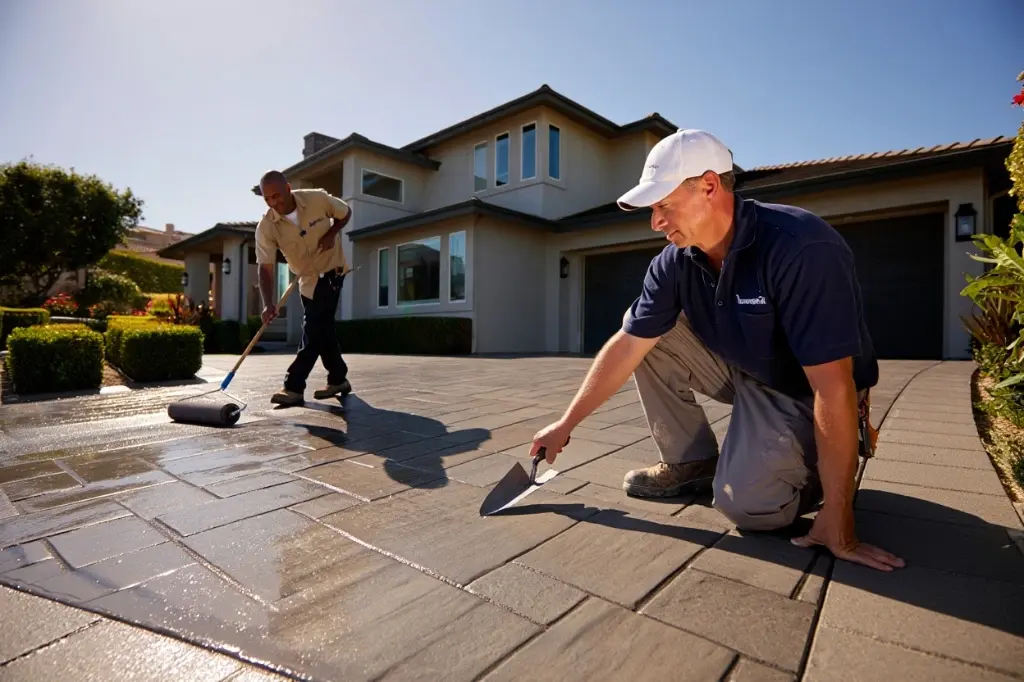
What If You Don’t Have Time for Cost Plans?
Like many contractors, you could be the one who is already loaded with work and doesn’t have even an hour for estimates. Outsourcing estimating services is the best option in this situation.
The Benefits of Outsourcing Concrete Estimating Services
- It makes you skip full-time estimator salaries and software costs, enabling you to save on overheads.
- Professional freelance estimation services often cost less than in-house teams, where mistakes or missed bids come in higher frequency.
- Outsourced experts can catch details your in-house team might overlook during busy weeks.
- You can get precise and accurate estimates within hours, not days.
- Outsourcing estimating solutions enables contractors to handle more bids during peak seasons.
- They come with more comprehensive local data, leveraging regional insights and trends.
FAQs
Why is there a need to seal a concrete driveway?
Sealing blocks water, oil, and salts from entering pores. It prevents cracking and staining, ensuring that the driveway lasts longer.
How much does a heated driveway cost?
Heated systems cost from $10–$25 per sq ft installed, plus sealing. Total projects can hit $15,000–$40,000, depending on size and controls.
What is the best driveway sealer?
Polyurethane or penetrating silane/siloxane works well for most driveways. They balance protection, appearance, and durability in the current environmental conditions.
How to seal a concrete driveway?
Start by cleaning thoroughly. Follow it by repairing cracks and then applying sealer evenly with a sprayer or roller. For the best results, work in sections on a dry day.
Can I seal my driveway myself?
Yes, for simple jobs. As a house owner, you can do some tasks to reduce the sealing cost. But hire a professional for the complicated jobs, as they can cost more than the actual cost if things go wrong.
Conclusion
Sealing protects your concrete driveways from damage and keeps them looking nice. In 2026, it costs an average of $1.35–$2.50 per sq ft, but smart choices in size, sealer, and prep can significantly reduce the project cost. Therefore, you must control these variables from planning to execution. Plus, start with accurate estimates to lead to better bids, smoother jobs, and good profits.
And when the deadline is pressing hard, rely on Estimations’ team. We provide cost budget estimating services for all construction trades, while keeping an eye on precise and accurate data in each line.
Bid with our assistance and ensure you win the contract with a good profit in hand!
