
If you’re bidding work for 2026, you’re probably feeling it already. Estimates that used to feel solid now come with a quiet question attached:
Will these prices still hold when materials are actually ordered?
That uncertainty isn’t random. It’s coming from persistent building material inflation, ongoing tariff pressure, and a construction market that no longer resets to old price floors.
Why Material Pricing Feels Unstable in 2026
Construction material prices are no longer swinging wildly as they did during peak supply-chain chaos. But they also haven’t gone back to normal. According to U.S. construction price tracking:
- Construction materials were over 40% higher in late 2025 than in February 2020 levels
- Year-over-year increases returned in 2025 after a brief slowdown
- Price stability now depends heavily on material type, sourcing, and tariffs
This matters because bids are built on assumptions. When the assumed normal price level quietly moves upward, estimates based on outdated benchmarks introduce risk even if individual line items appear reasonable.
Building Material Inflation: What Changed After 2020
Before 2020, construction material rates followed estimated numbers. Prices shift with the demand for specific construction as well as seasonal effects. In that situation, the contractor could confidently rely on historical data and experts’ guesses.
Then, COVID-19 came, and the results of this estimation disappeared. Construction indtsry experinced fractureed sup;y chain, labor shortages, and high energy costs. This was the time when inflation started.
Here’s how common materials compare pre-pandemic vs. recent pricing.
| Material | 2020 Avg | 2024–2025 Avg | Change | 2026 Expectation |
| Ready-Mix Concrete | Baseline | +35–40% | ↑ Significant | Continued gradual increase |
| Steel Mill Products | Baseline | +45%+ | ↑ Volatile | Tariff-sensitive |
| Lumber | Baseline | +30–50% swings | ↑/↓ Cyclical | Ongoing volatility |
| Copper Wire & Cable | Baseline | +8–10% YoY | ↑ Steady | Inflation-linked |
| Gypsum Products | Baseline | +5–6% YoY | ↑ Moderate | Stable but elevated |
Even the materials, like steel products, that had declined for some time during that period, did not stop when inflation started.
Tariff Impact on Construction Costs in 2026
Tariffs remain one of the largest hidden cost drivers in construction pricing. What they are affecting more include:
- Structural steel
- Aluminum framing and curtain wall systems
- Electrical components
- Mechanical equipment
- Imported finishes and fixtures
According to a recent analysis, some steel and aluminum tariffs effectively reach 50% on specific imports, increasing tariff impact on construction costs. Also, U.S. aluminum buyers are paying 60–70% premiums over global base prices.
The Boston Consulting Group estimates that tariffs could add $22 to $29 billion annually to U.S. steel and aluminum costs when derivative products are included. Those costs do not sit at the top of a bid as a single line item. They appear indirectly, through higher supplier pricing, shorter quote validity periods, and more conservative risk buffers.
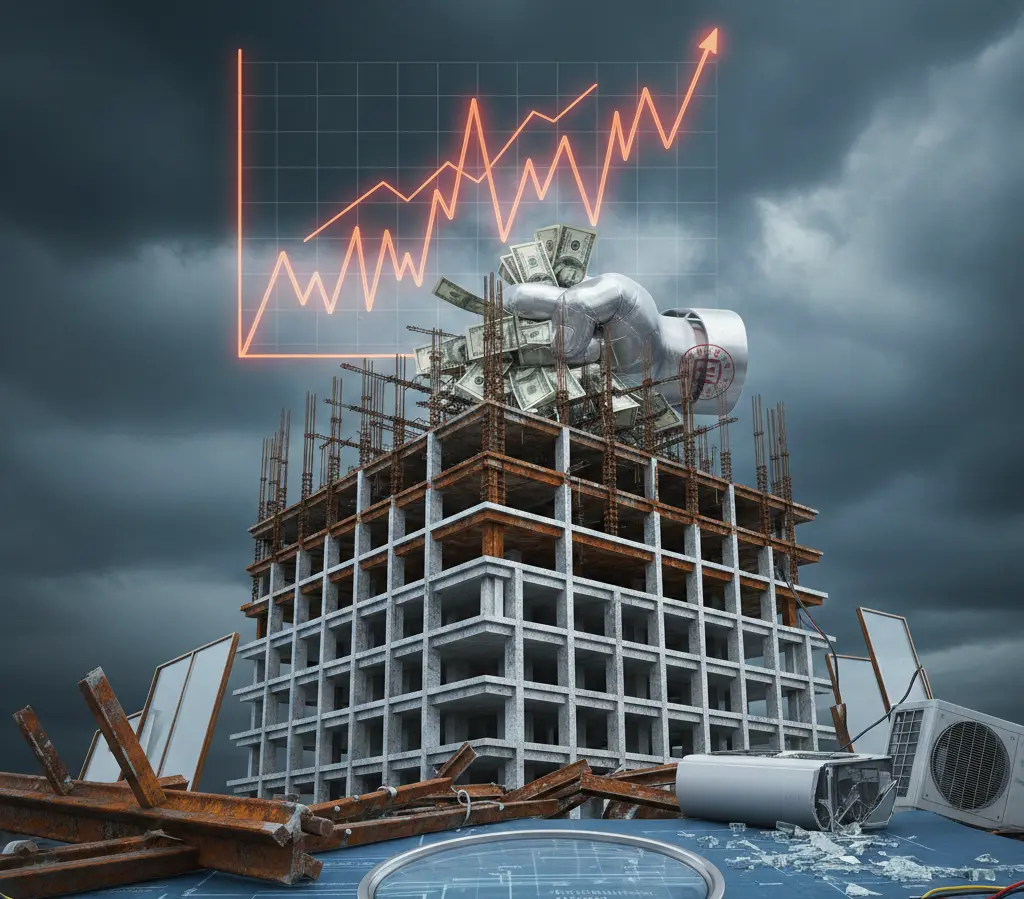
How Tariffs Affect Bids?
Developers and owners often look at total project budgets, while contractors live inside the details of procurement timing. That difference matters.
Tariffs rarely cause an instant price increase on bid day. Instead, they create uncertainty. Suppliers hesitate to lock pricing for long periods. Fabricators issue quotes valid for 15 or 30 days. Subcontractors hedge their numbers because they know replacement pricing could change before purchase orders are issued.
This is why two similar projects can price very differently, depending on schedule and sourcing. A project that procures steel early may look efficient, and the project that delays procurement may absorb increases even if the original estimate was accurate at the time.
How Material Pricing Affects Construction Bids
The most common estimating mistake today is assuming that stable pricing equals safe pricing. It does not.
Most construction projects have longer exposure windows than ever before. Design development stretches on; permitting timelines extend; owners delay notice to proceed; meanwhile, supplier quotes expire.
Even a modest 5 to 7% material increase between estimate approval and procurement can erase margins on fixed-price contracts. Industry analysis shows that tariffs have added ~$9,200 to the cost of a single-family home construction (excluding the expense for labor or design changes).
The risks are higher for commercial and industrial construction projects. How? Steel-heavy scopes, mechanical systems, and electrical jobs increase the impact of building material inflation. Understanding how to estimate construction costs accurately has become more complex in 2026, especially when material escalation and tariff exposure can quietly erode margins between bid approval and procurement.
Construction Material Cost Risk Scenarios
● Base Scenario
Material prices remain elevated with 2–4% inflation. Tariffs stay in place, and supply remains tight but manageable.
● High-Risk Scenario
Increased tariffs, energy price hikes, or logistics issues lead to an increase in the prices of steel, aluminum, and other imported materials.
● Relief Scenario
Selective tariff easing or improved domestic capacity slows price growth. Prices stabilize but rarely fall meaningfully.
Pro Tip: Avoid optimism and focus on smart bidding!
Different Construction Materials Costing Trend in 2026
● Structural Steel & Mill Products
Steel is still tricky heading into 2026. Prices haven’t settled, and they probably won’t anytime soon. Tariffs, limited supply, and capacity issues keep pushing prices up. If steel sits in the estimate too long before it’s bought, you must expect financial surprises. Simply put, jobs that lock steel early are safer.
● Ready-Mix Concrete & Cement
Concrete prices didn’t increase overnight; they just kept climbing. Fuel, energy, and trucking costs are doing most of the damage. In 2026, increases should be slower, but they’re not stopping. And local conditions matter more than national trends. One plant change or a longer haul can increase prices fast.
● Lumber & Wood Products
Seasonal demand, mill output, and regional supply shifts can increase lumber pricing in a hurry. Stable pricing is nice when it happens, but you can’t count on it. You need to treat lumber like a moving target, not a fixed cost.
● Aluminum & Curtain-Wall Systems
For aluminum, import premiums and tariffs keep U.S. prices well above global levels. Curtain wall, storefront, and specialty framing systems are especially risky. Quotes don’t stay open long, and replacement pricing can hurt if procurement shakes.
● Copper, Electrical & MEP Materials
Copper and electrical materials don’t usually suddenly increase in price; they just keep moving up. Global demand and currency changes drive most of it. So, you need to build in modest escalation, watch lead times, and don’t assume today’s price will still be there months from now. Interior finishes are not immune to inflation either, and understanding drywall pricing trends and repair costs helps contractors avoid underestimating gypsum-related scopes in long-duration projects.
Cost Escalation Clauses: From Exception to Standard Practice
In earlier markets, cost escalation clauses were often seen as aggressive or unnecessary. In 2026, they are increasingly viewed as standard risk management tools, especially on long-duration projects.
Well-structured cost escalation clauses:
- Apply only to defined materials
- Trigger only beyond set thresholds
- Require supplier documentation
- Protect both the contractor and the owner
They acknowledge something everyone already knows, including that prices move after bids are approved.
Which Sectors Are Increasing Construction Material Costs?
● Infrastructure and Public Projects
Government-funded infrastructure remains material-intensive and schedule-driven. Steel, concrete, and aggregate demand stay firm.
● Data Centers and Energy Projects
Data centers consume massive quantities of steel, electrical, and mechanical materials. Energy projects do the same. These sectors keep supply tight even when other markets slow.
● Residential and Light Commercial
These segments are more sensitive to rates and financing. Demand fluctuates, but material prices don’t necessarily follow it down.
Request a professional construction cost estimate today and bid smarter!
The Role of Software & Technology
Technology and software are doing the magic and changing the way of construction. In other words, technology plays a critical role in modern construction estimating. Databases, digitized takeoffs, and pricing tools improve speed and consistency. But they do not interpret risk. Do you knwo what fills this gap? This is experience.
Understanding which trades are most exposed to tariffs, which materials have volatile supply chains, and how procurement timing interacts with schedules is not something software can infer on its own. It comes from years of bid-level exposure and post-award outcomes. While databases and pricing tools improve efficiency, the role of technology in modern construction estimating is limited without real-world experience to interpret tariff risk, volatile supply chains, and procurement timing.
In a market like 2026, the difference between profitable bids and painful ones is rarely a math error; it is an assumption error.
How Permitting Timelines Impact Construction Material Costs
If you’ve ever felt your estimate start looking shaky before procurement even begins, here’s why. Long permitting timelines, waiting for zoning approval, environmental sign-offs, or utility clearances, extend the window in which material costs can shift. Even accurate construction cost estimates are vulnerable. Steel, concrete, and MEP materials are particularly exposed because their market prices respond to inflation, energy costs, and labor availability.
According to recent ENR construction cost indexes, material prices have fluctuated up to 11% year-over-year for cement and concrete alone. That means a project delayed 6 months for permitting could see a meaningful jump in costs, even if your original takeoff was precise.
How to Protect Your Budget?
Today, estimators ensure time-based escalation of all allowances into bids. This is their strategy to protect margins by adding contingencies for delayed procurement, cost escalation, clauses, and frequent material price updates. How do they do so? By using monitoring indexes, like ENR and PPI. They are used for construction materials and tariff review announcements, allowing teams to react before prices increase.
Construction Labor Cost Trends in 2026
Material costs get all the attention. Labor quietly does more damage. Skilled labor shortages continue pushing wages up, especially in concrete, steel erection, mechanical, and electrical trades.
Over time, travel labor and productivity losses compound the issue. The issue is that contractors mostly ignore labor cost during estimating, whihc give unfveorble results during construction, not at the time of bidding.
Macro-Economic Outlook for Construction in 2026
Material pricing doesn’t live in a bubble. It never has.
In 2026, construction pricing is being shaped by interest rates, public spending, and uneven demand across sectors. Infrastructure, energy, and data centers are still pulling hard on materials. Housing and some commercial work are much more cautious.
That split matters. When demand stays strong in material-heavy sectors, prices don’t fall back to normal, even if other markets cool off.
The Impact of Location On Construction Cost
Not all material prices move the same way everywhere. Coastal markets, port-heavy regions, and areas with strong infrastructure or industrial demand often see higher landed material costs. Inland or secondary markets may lag, but freight and delivery offsets can erase those gains.
If you’re bidding outside your usual region, don’t assume national averages apply. They usually don’t.
What a Smart Contractor Should Do Now?
Forecasting in construction is never about certainty. It is about probability.
Based on current data and industry analysis, 2026 is expected to bring continued moderate inflation across most construction materials.
If you’re pricing work for 2026, here’s the practical playbook:
- Update material pricing assumptions regularly
- Flag tariff-exposed materials early in estimates
- Use escalation clauses on long-duration projects
- Stop relying on pre-2023 unit cost benchmarks
- Treat estimating as financial risk control, not just takeoffs
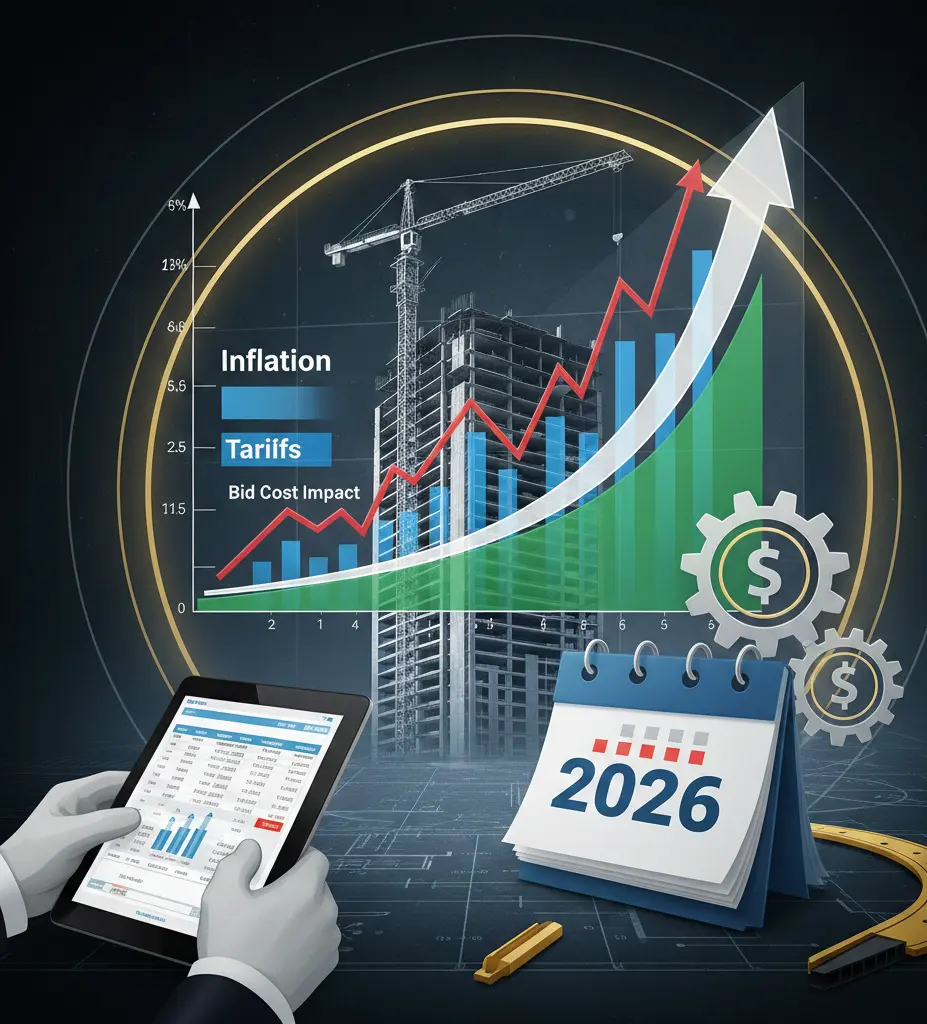
Practical Estimator Playbook for 2026 Bids
| Before You Submit the Bid | In the Contract | After Award |
| ● Update material pricing assumptions within days, not weeks
● Flag tariff-exposed materials early ● Separate volatile materials from stable ones |
● Use time-based escalation clauses
● Define materials clearly ● Require supplier documentation |
● Procure long-lead items early
● Lock pricing where possible ● Monitor indexes until purchase orders are issued |
FAQs
What’s the construction material price forecast for 2026?
The material prices will remain elevated with modest inflation, around 2–4%, rather than a dramatic increase.
How have concrete and cement prices moved recently?
Producer price tracking shows concrete and cement products up over 11% year-over-year due largely to energy, fuel, and logistics costs.
Which materials are most affected by tariffs?
Steel, aluminum, and other imported components are most tariff-sensitive, keeping prices higher and more volatile than locally produced alternatives.
Is general inflation the main driver of material cost increases?
No, while inflation matters, labor shortages, productivity pressures, and currency fluctuations also drive up construction material costs beyond simple inflation figures.
How much has construction cost inflation risen recently?
ENR cost index tracking shows overall construction costs rising about 3.4% year-over-year, with materials often increasing faster than general inflation.
Why are labor costs as important as material costs?
Skilled labor shortages have pushed wage rates upward, often becoming a bigger pressure on project budgets than materials alone.
How do supply chain issues affect pricing and timelines?
Global shipping and port congestion continue to cause delays and an increase. This, in turn add weeks to delivery times and higher landed costs for many materials.
Are concrete prices expected to stay flat in 2026?
Some forecasts suggest concrete prices may only modest increases or be stable compared with steel and lumber, but regional and freight factors could still drive variability.
How does currency strength affect material costs?
Weaker currencies can make imported materials like copper and specialty steel more expensive, especially when global demand shifts or local production is limited.
Final Takeaway
The construction material price forecast for 2026 does not signal a problem; it signals responsibility.
Prices are higher. Risks are real. Margins are thinner. But with disciplined construction estimating, clear contracts, and realistic assumptions, projects can still be priced competitively and profitably.
The firms that succeed in 2026 will not be the ones hoping prices behave. They will be the ones who planned for the fact that others don’t.
Ready to Bid 2026 Projects With Confidence?
If you’re pricing work for 2026 and don’t want inflation, tariffs, or delayed procurement eating your margins, you don’t have to guess.
Our construction estimating services help contractors build realistic, risk-aware estimates using current material pricing, tariff exposure analysis, and time-based escalation planning, avoiding outdated unit costs.
