
The bid is due, the calculations seem wrong, and time is short. Meanwhile, GC is asking for a precise and accurate proposal to bid and win the job. In this rush situation, many building professionals prefer guessing or a rough estimation, which leads to time and money loss later. Today, the construction estimating software has solved this issue. You can use them to automate tasks, avoid human errors, and keep things on track.
But which one is best for your project or job? Let’s explore the best construction estimating software trending in 2026, as well as the AI + BIM comparison.
Start with old vs new estimating methods.
Old Vs New Construction Estimating
Manual estimating creates 2 problems:
- Slow bids
- Inaccurate estimates
AI-assisted estimating tools reduce bid preparation time by around 40% and increase accuracy to the 85–90% range. Furthermore, modern AI takeoff concepts target seconds for baseline quantities with high accuracy on repeatable elements.
All credit goes to estimation switching tools, which eliminate the need for chasing files and re-entering the same numbers twice.
Construction leaders report that about 18% of project time goes to searching for data, while rework bursts end around 28% of the time. Therefore, building estimating software matters; it reduces duplicate work.
The Shift to Cloud Technology
Cloud adoption didn’t just happen because it’s convenient. However, it happened because teams need one plan set, one version, and one pricing source. Cloud solutions already represent a large share of the estimating-software market mix, and they keep growing fast.
Modern estimating platforms also push a single source of truth mindset.
As per Autodesk, estimation teams should keep quantities, costs, and documents connected in one workflow; this reduces errors and speeds estimates, ultimately helping you save time on project schedules. Similarly, Procore mentioned that connected information reduces wasted time and rework in construction projects.
So, in 2026, you need a system in the form of software that gets updated in real-time and provides you with accurate data.
Estimating Software Demand in 2026
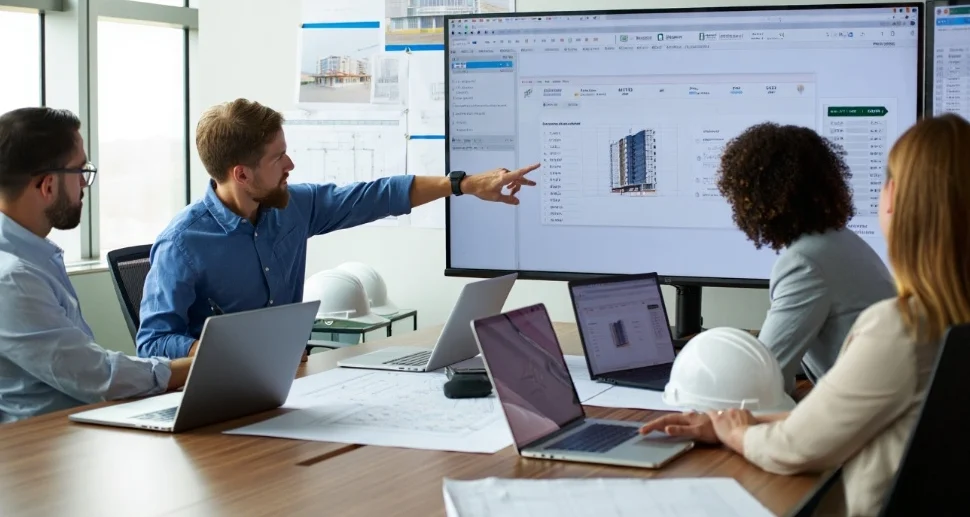
Construction tech spend keeps rising because margin pressure keeps rising, too. According to a study, construction and design software revenue is trending toward roughly $19.1B by 2030, up from about $11.0B in 2024. Therefore, project owners expect faster answers with precise and accurate backups.
BIM adoption also keeps accelerating, and it changes what takeoff even means. The BIM market is moving around $11.29B in 2026 and could reach $21.42B by 2031.
To benefit from this advancement, just make sure that your chosen software can give valuable results; otherwise, you will waste money and time and rework.
Top 7 Construction Estimating Software 2026
| Tool | Starting Price | AI Takeoff Accuracy | Best For |
| STACK | $2,599 / user/year | 95%+ | Small–Mid GCs |
| ProEst | Custom | 92% | Commercial |
| PlanSwift | $2,000 / year | 90% | Plan-based |
| Handoff.ai | $149 / month | 97% | Remodelers |
| Buildxact | $199 / month | 93% | Residential |
| Sage Estimating | Enterprise | 94% | Large firms |
| Clear Estimates | $59 / month | 89% | Beginners |
Let’s explore each tool/software in detail!
1. STACK
This is the most common tool among the experts providing building estimating services in the US. STACK fits teams that bid fast and struggle with revisions daily. It prices as low as $2,599 per user yearly, and Premium adds AI-powered capabilities. It also stays cloud-based, so your team works anywhere without installs.
The real win is speed with controls. One STACK customer story shows a 40% takeoff time cut and a doubled win rate. That’s what estimators want: more bids, fewer late-night fixes.
Plus, mobile matters, too, and STACK pushes a field app and office-to-field access as a core workflow.
Note: STACK pricing is per user, and teams often add features over time. So you should budget for growth.
2. ProEst
This name walks side-by-side with quantity material takeoff services. ProEst targets commercial estimating teams that need structure and reporting depth. As per Autodesk, ProEst is a cloud-based estimating tool with takeoffs and bid-day analysis in one place. Furthermore, a case example has shown an 8% estimated hit-rate increase and a 50% productivity increase by using ProEst.
Do you know what makes it stand out? It cuts takeoff time in half through digital takeoffs. That matters when additions keep landing late.
Additionally, ProEst supports flexible cost databases, including a costbook with regionalized lines. That flexibility can feel heavy until your team standardizes templates.
3. PlanSwift
PlanSwift is still a workhorse for plan-based takeoff. It sells as a $2,000 annual subscription that includes updates, support, and training hours.
The tool stands out when you want an estimator-controlled measurement. Once you have built assemblies, you can drag and drop them onto takeoff items for required data. That workflow keeps your logic visible, which helps juniors learn faster.
PlanSwift also stays trade-friendly. Its site calls out workflows for concrete, drywall, electrical, HVAC, and more. Plus, it is a powerful tool, but desktop-style workflows can create bottlenecks. You’ll feel that if multiple estimators touch the same plan set.
4. Handoff.ai
This tool aims at residential contractors who want speed without a big stack. In other words, AI estimating is a document-driven automation system with machine learning and computer vision.
Handoff’s practical edge is input flexibility. It generates estimates from text, files, and voice transcription. That fits the real-time assessment for remodeling projects. Remember that this tool bundles more than estimating, which can help or distract. The pricing table includes credits, catalogs, proposals, and mobile access. So you must define what done means for your team.
Compare top estimating software for 2026 and choose the best today.
5. Buildxact
Buildxact is best for residential builders who want takeoff, estimate, and job controls connected. Its Foundation plan lists $199 monthly, or $169 monthly with annual billing. It also includes unlimited users, which changes the math for small teams.
According to a case study, a remodeler reported spending 30–40 extra hours weekly just to produce estimates. After adopting Buildxact, he reported faster estimating and the ability to bid on more jobs.
Buildxact’s base plans often pair with add-ons. For example, Blu add-ons carry separate monthly fees on some tiers. Therefore, you should price your exact feature set upfront. Plus, the tool rewards template discipline. The same case story notes templates cover about 90% of their recurring work. That’s great, but you must maintain those templates.
6. Sage Estimating
Sage Estimating is built for depth, standards, and bigger teams. In other words, it is a long-running estimating standard with cloud-connected tools and Sage AI. This tool also supports collaboration with multiple estimators working on the same projects.
Sage’s strongest fit shows up in enterprise workflows. The tool can build estimates using takeoff and BIM files, and advanced versions support 3D BIM and BOM outputs. It also integrates with RSMeans and other databases, plus your custom cost data. So, if you need audit trails and repeatable assemblies, Sage belongs on your shortlist.
7. Clear Estimates
Clear Estimates works best for residential contractors who need speed and consistency. It focuses on localized estimation and templates, not engineering-heavy BIM workflows. The tool includes over 12,000 parts with localized pricing, updated quarterly. The tool management itself has claimed coverage across hundreds of U.S. areas, which helps when labor is scarce by zip code.
Clear Estimates wins on simplicity, but it has limits. If you need complex bid-day leveling or deep model-based quantity extraction, it won’t compete. Plus, the hidden risk is over-trusting templates. Templates speed work, but they can hide exclusions if you don’t review the scope. So, keep an estimator checklist for every job type, every time.
See more here: Top 10 Construction Estimating Software Tools for 2026: Reviews, Pricing, and Best Picks.
How to Choose the Right Construction Estimation Software?
Start with one question: what problem costs you margin today?
If you miss quantities, prioritize takeoff automation and revision management. And if you miss pricing, prioritize cost databases and supplier feeds.
Red Flags that Eat Your ROI
- Avoid tools that force duplicate entry between takeoff, estimate, and proposal. That’s where mistakes multiply and time disappears.
- Also, avoid AI that won’t show its assumptions, keeping in mind that AI can speed repeatable tasks, but you must verify outputs.
Warning Signs You Must Consider
- Inability to track plan revisions clearly across the team.
- Inability to update estimates without breaking templates or reports.
- Inability to export data for accounting or cost control workflows.
How to Transfer Data from Excel to the Tool Successfully?
- Never import everything one time. Import your best 10 completed projects and build from those.
- Second, standardize assemblies before you migrate history. PlanSwift and similar tools support precise assemblies and repeatable parts. And, Sage and ProEst assist standardized bid structures and database discipline.
- Next, build a pricing refresh set, focusing on the fact that supplier pricing fluctuations can destroy margins fast, especially in residential.
- Finally, pilot one project type for 30 days, and then expand after you lock your workflow.
When to Skip Software in Construction Estimating?
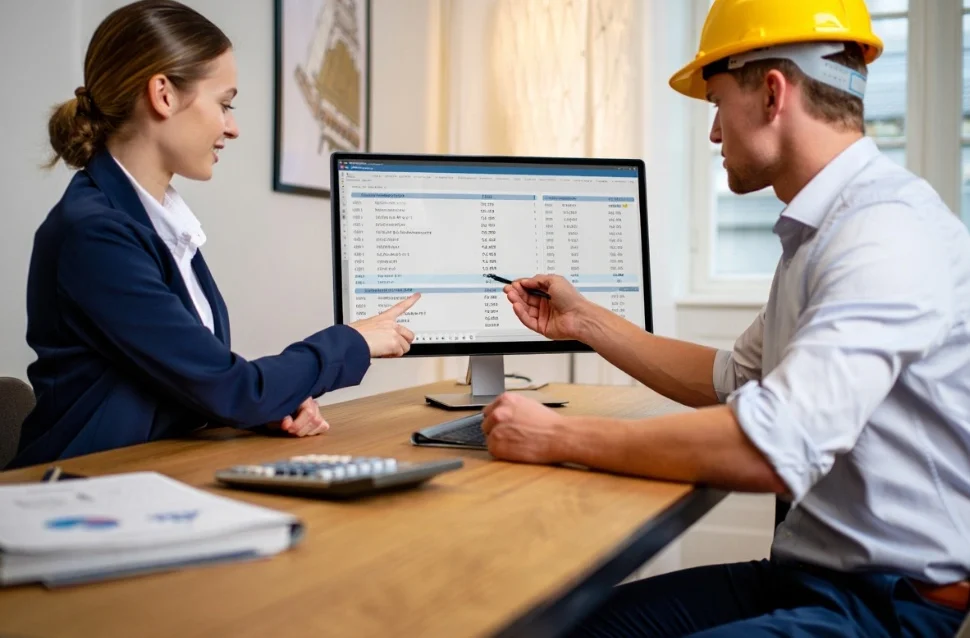
Sometimes the issue isn’t your tool. It’s your project scope control and your estimating discipline. If you only bid a few repeatable job types monthly, Excel can still work. However, you must lock assemblies, checklists, and pricing updates. Otherwise, errors increase and damage the job.
Similarly, if your plans come in messy scans, AI will struggle. You’ll spend time correcting output. So, choose software when volume or complexity forces change, and skip it when discipline is the real missing piece.
AI Vs Humans in Building Estimating
In simple words, AI speeds repeatable work. It can count, measure, and sort issues fast. But it can’t feel risky the way an expert estimator does. For example, design errors and omissions drive real change-order dollars at scale. An experienced estimator catches constructability gaps early, before they become a source of money wasted. Therefore, you should treat AI like a power tool; it multiplies skill, but it doesn’t replace human skill.
Conclusion
AI and BIM are how you bid faster, reduce rework, and protect profit. You need to choose software that matches your construction project type, bid volume, and change frequency. Also, lock templates, pricing updates, and estimating standards.
Estimates help contractors, builders, architects, and engineers price construction jobs with confidence. We deliver fast takeoffs, localized pricing, and accurate bid backups on your preferred platform. Rely on our construction estimating services, which are baked with modern tools and software, plus a human touch to ensure you win the bid. Contact us for more details!
FAQs
What file types should a construction estimating software support?
Tools that accept native PDFs and handle large plan sets smoothly are the best. You should also look for precise measurements on vector PDFs, plus version comparison support. If you receive CAD often, confirm DWG or DXF workflows before you commit. Also, confirm exports that your accounting team can easily use.
Does AI takeoff mean you can stop reviewing quantities?
Not at all. AI automates repeatable tasks, like counting and labeling elements. But you still need a scope-based review, especially for exclusions and phasing.
What’s the best way to test software before buying?
- Run one real project through a free trial or guided demo.
- Use a plan set with additions, alternates, and at least one tricky trade page.
- Then compare your estimate to a completed job you trust.
If the platform takes time or slows down your working, go for another one.
How long does cost estimating software implementation usually take?
Most platforms go live in phases, not all at once.
- First, you migrate templates and cost data, then you train estimators.
- Next, you pilot one project type and expand standards.
Can software help reduce rework, or is that just field management?
It can reduce rework when it reduces bad information and duplicate entries. Estimating tools that connect documents, quantities, and revisions reduce mismatch risk. That’s how estimating impacts the field before mobilization.
Which platforms win the STACK vs ProEst vs PlanSwift in 2026?
It depends on your workflow. STACK tends to win for cloud speed and team collaboration. ProEst fits structured commercial estimating with reporting depth. And the PlanSwift fits an estimator-controlled takeoff with heavy customization.
