
Are you worried about moisture, pests, and costly repairs eating away under your building? Crawling under the building can help since it fixes problems with plumbing and mold growth in a tight area.
Do you know what a crawl space foundation does? It actually elevates your house by adding a narrow, accessible, underfloor space. The purpose is to keep the distance between wet soil and wooden support while ensuring that electricians and plumbers easily reach the place for repairs or other jobs. Remember that a coral space acts like a built-in buffer against damp ground and also provides support for a dehumidifier or insulation.
Contractors like this option because it’s usually cheaper than a full basement and more useful than a flat slab. Ready to learn more? Let’s explore crawl space foundations, their costs, and practical tips.
What is a Crawl Space Foundation?
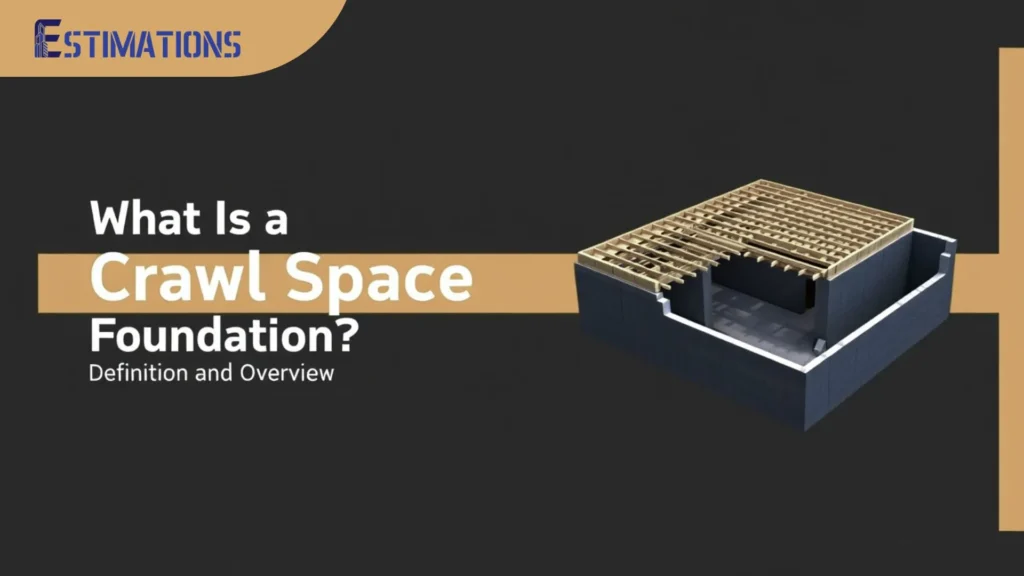
A crawl space foundation is a raised foundation with a low open space under the first floor of a building. In simple words, picture your house lifted 2 to 3 feet off the ground, supported by small walls or piers.
The gap is only the size that offers crawling, and it mostly ranges between 18 and 24 inches. This space is usually unfinished and unoccupied, like an indoor crawlway beneath your home.
The Best Use of Crawl Space Foundation
As the crawl space foundation concept shows, it is a mini, unfurnished basement that you can see under the floor. But, it can’t be used for living due to its very small size.
Another difference: basements mostly go below the frost line in cold climates; however, crawl spaces are preferred in milder areas as they enable a little bit lifted house just for access.
Most prominently (as already mentioned), a crawl space foundation also keeps moisture and pest issues away from the building.
What Is the Purpose of a Crawl Space Foundation?
A crawl space foundation serves several important functions in a home’s design. Here’s what it’s for:
● Moisture Control
As the crawl space foundation lifts the house off the ground, it ensures that no wet soil destroys the house. In other words, the foundation works as the barrier that keeps the floor dry and reduces the chances of mold growth and wood rot. To ensure no humidity in the foundation, some prefer a ventilation system or a vapor barrier.
● Ventilation
If you add ventilation in a crawl space, it will regulate the air quality underground. You can use vents and fans to allow fresh air to move through the space. This will remove moisture, reducing the chances of mold growth. Furthermore, there will be almost no chance of a musty smell.
● Utility Access
Consider a crawl space as a built-in service tunnel since it provides an easy room to crawl to plumbing, electrical, and HVAC systems for particular jobs. For example, if your HVAC system needs repair, the experts you hire will crawl into the system, make repairs, and come out. Do you know what you avoided in that situation? Ripping, breaking, and reconstruction of slabs and floors. So, a crawl space foundation enables quick, efficient, and cost-effective repairs under the ground.
● Insulation & Energy Efficiency
Add an insulation system in a crawl space, and your area becomes energy-efficient. Going with this option means you are adding a feature that will reduce the heat loss in winter and heat gain in summer.
Adding this ensures that your house’s inside HVAC system will not need to work harder to maintain the cozy temperature. Well, you can add this by a protection layer with a rigid foam or spray insulation in the crawl space foundation; this will reduce your energy bills, particularly during extreme temperatures.
● Structural Support
Crawl space foundations give solid support on uneven or shifting ground. The short foundation walls distribute the building’s weight around the perimeter and down to stable soil.
In areas with soil movement or light flooding, this flexibility helps the structure remain stable. Compared to a slab, which must be completely level, a crawl space can be adjusted by adding or reinforcing piers. This makes it suitable for sloped lots or expansive soils. In fact, crawl spaces let builders adapt to challenging sites where a flat slab might crack or become unlevel.
● Pest Prevention
If you are looking for a pest-resistant foundation, there is no option like this available in the market. But a properly-designed crawl space foundation can cut this issue. Elevating the house means you are discouraging termites, rodents, and other critters from reaching the floor joists. In other words, a well-sealed and properly-finished crawl space with a sound vapor barrier and tight joints keeps pests out of the space.
Regarding maintenance, you must remove debris and seal holes to reduce the risk of pests underground.

Crawl Space Foundation vs Other Foundation Types
Crawl space foundations occupy a middle ground between slab and basement foundations. Below is its comparison with other foundation types:
Crawl Space Foundation Vs Slab Foundation
Compared to a slab foundation, a crawl space is usually more expensive but far more accessible. A slab simply sits directly on compacted soil; it’s quick and cheap, often around $5–$14 per square foot.
But a slab gives no underfloor access, no moisture buffer, and can crack more easily if the ground shifts. In contrast, a crawl space costs a bit more, often $8–$21 per sq. ft, but it raises the home above damp ground and exposes plumbing for easy repair.
Crawl Space Foundation vs Full Basement
Compared to a full basement, crawl spaces cost much less. Basements require extensive excavation and full-height walls, often $18–$50 per sq ft. They provide finished storage or living space, but in most climates, and in cost-conscious projects, they’re overkill.
Crawl spaces don’t give you that extra room, but they do lift the home above flood levels and allow some storage of hardy items, like tools or seasonal gear.
Types of Crawl Space Foundations
Crawl space foundations come in a few common varieties. The two main methods are block & base and pier & beam. In addition, we distinguish by ventilation type: vented vs. encapsulated.
● Block and Base Foundations
Block-and-base crawl spaces are literally houses built on blocks. Its support system contains short walls or individual piers, which are made of poured concrete, cement blocks, brick, stone, or even heavy timbers. If you see a house perched on concrete blocks, this is a block-and-base foundation.
Additionally, between the blocks, you can add decorative skirting around the perimeter or leave it open. This type of crawl space foundation is preferred due to better accessibility, having a larger space than other types.
● Pier and Beam Foundations
It is similar to the first type but has a difference too: around the edges of the house, it contains a continuous concrete beam. In this type of foundation, a solid concrete or masonry wall runs along the perimeter.
And builders support it at intervals by deep footings or piers. In a pier and beam foundation, you can pour a long reinforced concrete footing, eliminating lots of small block piers everywhere. On top of the beam, the floor joists sit.
To see it, you can observe a house with vents or grilles along the building’s base, which allow open air movement under the continuous perimeter beam. If this is not included, moisture can occur underground. Some people prefer to partly obstruct the crawl area by the beam, while keeping utilities still under the floor joists.
● Vented Crawl Space Foundations
Did you know that people in old times preferred vented crawl spaces? This means that they used to leave vents or openings in the perimeter foundation walls to ensure better air regulation under the ground. In fact, vented crawl spaces were standard, especially in warm areas. This way, natural air flow kept the area dry and moisture-free.
But there was a problem with the vented option: pests and insects. Therefore, today, vented crawl spaces are less popular, especially in wet climates.
● Encapsulated (Conditioned) Crawl Space Foundations
A modern alternative is the encapsulated or conditioned crawl space. This type is fully sealed off from the outside world. In this type, there are closed vents with thick plastic or rubber vapor barriers that cover the floor and walls. People also add insulation and dehumidifiers with encapsulated crawl space foundations to control humidity.
An encapsulated crawl space foundation ensures a dry and conditioned zone, with almost no chances of moisture, mold, and pests under the ground. Today, experts prefer a sealed, conditioned crawl space for the best moisture control and air quality.
Pros & Cons of Crawl Space Foundations
Crawl space foundations offer some real advantages for homeowners and builders, but they have downsides too. Here’s a side‐by‐side look:
| Pros | Cons |
| Easy access to underfloor utilities (plumbing, electrical) | Requires ongoing maintenance and inspections |
| Typically, lower foundation repair costs than basements | Under-home leaks or moisture issues may go undetected until serious |
| Elevates the home for better yard drainage and flood protection | More susceptible to soil movement and wind shifts (lighter structure) |
| Lighter wood floors and structure are easier on labor and materials | Greater risk of mold, mildew, and pests if not properly sealed |
| Simpler to expand or remodel (additions often easier) | Not ideal in cold climates (needs deeper footings) or very steep sites |
How to Build a Crawl Space Foundation
Building a crawl space foundation follows a set of critical steps, usually by a professional foundation team. Here’s the general process:
1. Plan & Prepare the Opening
Professional teams start by laying out the crawl space footprint. The openings under the house must be 18 inches high and 24 inches wide (standard code), ensuring that the workers can easily crawl underground. During this stage, you must factor in soil conditions and site prep factors to keep things on track.
2. Excavate Below Frost Line
Next, the team dug the trenches for the footings. In areas with cold climates, this means excavating below the local frost line, which helps avoid ground freeze from heaving the foundation. However, in case of warmer places, you can deepen the footings 12–18 inches.
Remember that excavation costs can vary; therefore, you need professional building estimating services for accurate budget plans and void costs overruns.
3. Build Foundation Walls
After excavation, pour or stack the foundation walls. Walls are commonly made of poured concrete, insulated concrete forms, or concrete blocks. These walls form the stem walls around the perimeter of the crawl space.
Masonry block walls are often used on block-and-base foundations, while concrete is used for continuous perimeter beams on pier-and-beam styles. In either case, high-quality concrete and rebar should be used to resist soil moisture.
4. Add Footings & Support Piers
With walls in place, short footings and floor support are installed. A concrete topping slab is usually poured on the crawl space floor; it may be a thin slab or simply a well-compacted base.
Pillars or piers of concrete or brick are also added under interior floor beams for extra support. These piers can be poured or precast. Each pier supports a floor joist beam. Precision is key: each support must be perfectly level to keep the floor steady.
5. Finish Crawl Floor
It is optional. Depending on the design of the crawl space foundation, you can add moisture barriers. In the case of an encapsulated crawl space, you must add a heavy-duty vapor barrier to the walls and floor.
However, if you are considering a vented crawl space foundation, you can leave the floor bare or simple slabbed with open vents.
Need Expert Guidance for Your Foundation Project? Contact Our Construction Specialists Today!
How Much is the Cost of a Crawl Space Foundation in 2026?
The exact number depends on the region, house size, material used, site condition, etc. Based on industry data and contractor estimates:
New Construction
Suppose you are working on a house of 2,000 sq ft. Its new crawl space foundation can cost you from f $30,000 to $36,000, which means $15 to $18 per square foot of foundation area.
However, if the house is small, the crawl space foundation cost will be lower. For example, for a 1,000 sq ft crawl space, you may have to pay between $15,000 and $18,000. Remember that, in case of large houses or complex shapes, the job can exceed $40,000.
See the table below for a better understanding!
| Home Size | Crawl Space Foundation Cost |
| ~1,000 ft² | $15,000–$18,000 |
| ~1,500 ft² | $22,500–$27,000 |
| ~2,000 ft² | $30,000–$36,000 |
| ~3,000 ft² | $45,000–$54,000 |
Replacement or Repair
The crawl space foundation reaping cost is lower than the new build. If you are working on standard repairs, like fixing sagging beams, waterproofing, or joists, the project can cost from $2,500 to $12,000. However, if the foundation is asking for major repairs, like correcting severe settling or rebuilding piers, it will cost more.
For comparison, a slab repair might be $500–$2,000 for mudjacking, but crawl space work usually involves block or beam work, which costs more per hour.
Cost Drivers: The key factors pushing these costs up or down include concrete prices, labor rates, and how much rock or clay must be dug out. We’ll detail those next.
Crawl Space Foundation Cost Drivers
Several major factors or cost drivers determine the final price tag of a crawl space foundation. Here are some of them:
Site Preparation & Excavation
Clearing trees, leveling and digging trenches is often 10–20% of the foundation cost. Dependable Concrete notes site grading can run $2–$5 per sq ft. Furthermore, if you consider a 2,000 ft² house, the cost can range from $4,000 to $10,000 in groundwork. In case of hard and rocky soil or many trees around the area, the project cost will increase due to additional hauling and equipment needs.
Footings & Concrete Walls
The concrete itself, footers and walls are a big cost driver in crawl space foundation construction. If you consider poured footings, walls, and formwork, it can cost between $4.50 to $8 per sq ft foundation area, with a wall thickness from 8 to 12 inches plus steel reinforcement. Additionally, if you choose high-strength or insulated concrete, it will obviously cost more.
Lumber, Piers & Framing
Wood beams, columns or block piers also cost money in crawl space foundations. For example, pressure-treated posts or concrete piers can run a few hundred dollars each. A row of 8–12 posts under a medium-sized house might total $2,000–$5,000 in materials and bracing.
Labor & Equipment
Foundation work is labor-intensive. Skilled concrete workers, carpenters, and equipment operators all have to be paid. A rule of thumb from contractor estimates is that labor can be 30–50% of the total project cost.
In practice, that might translate to $6,000–$15,000 of your budget for crew wages on a medium house. Also, the harder site access, like a narrow lot, city vs rural or over time, can inflate labor costs.
Moisture Barrier & Waterproofing
Installing a heavy-duty vapor barrier on the crawl floor and walls typically costs on the order of $1,000–$3,000 for a whole crawl space. Good waterproofing, including drain tile, membranes, might run another $1,000–$3,000 if needed. While not structural, skipping this can lead to bigger expenses later if water seeps in.
Insulation
To meet energy codes, many homes insulate the crawl space walls or floor. Rigid foam panels or spray foam can range from $0.50 to $1.50 per sq ft, totaling roughly $500–$4,000 depending on depth and quality. This isn’t always installed immediately, but it’s a common add-on that helps efficiency.
Permits, Plans & Engineering:
Don’t overlook soft costs. Building permits, engineer-approved plans, and inspections might run $1,000–$3,000, depending on local fees and project complexity. Some municipalities charge a permit per square foot or project value. Allocating 5–10% of the foundation budget for these fees is wise.
Site Conditions & Modifications
If your lot is sloped or has poor soil, extra work is needed. Adding fill, compacting clay soils, or sinking piers deeper can each tack on thousands. For example, a steep slope might require retaining walls or stepped footings, adding $5,000–$10,000 or more.
Likewise, very hard bedrock may need jackhammers and blasting, which can double excavation costs on that portion of the site.
Additional Features
Extras like a built-in sump pump, special crawlspace doors, or integrated dehumidifiers each add to the budget. A sump system might add $500–$2,000, while a high-quality vapor-sealed door could be $300–$700. These are smaller line items but are worth considering when estimating the project.

How to Save Costs on a Crawl Space Foundation Project?
Building smartly can lower your crawl space budget. Here are 6 practical ways to save money without cutting the quality of the project:
Optimize the Design
Work with your architect or engineer to minimize crawl space volume. Use the minimum required crawl height, which is often 18″, and avoid unnecessary extra square footage. A simple rectangular footprint costs less than a very complex one. Also, consider a monolithic, also called poured concrete, approach vs. expensive footers when possible.
Efficient Excavation
Schedule site work in drier weather if you can, to avoid delays. Reuse onsite soil for fill rather than trucking in expensive fill dirt. Keep excavation machinery on site to do other tasks, like pad preparation, so you get more value from the rental.
Material Savings
Shop around for bulk discounts on concrete and blocks. If codes allow, precast piers can be cheaper than poured columns. Use locally-sourced materials to cut hauling costs. Sometimes, a high-quality lower-cost insulation, like rigid foam, gives similar performance for less money than spray foam.
Labor Bargains
Get multiple bids from reputable teams; prices can vary significantly. If you have the skill, consider doing non‑skilled tasks yourself, like helping with cleanup or vapor barrier installation. Also, building outside of peak season or on a flexible schedule can reduce labor rates.
Avoid Over-Engineering
Only design for what you need. For example, if the ground isn’t fully saturated, you might skip a sump pump. Furthermore, if walls don’t need to hold back soil, like a pier & beam, you can use simpler block walls. Don’t pay for drainage or insulation measures beyond what your climate requires.
Prevent Future Costs
It sounds odd, but spending a bit now on things like a good vapor barrier or a sealed door can save thousands later. A moist, damaged crawl space will need repairs and remediation that far exceed the upfront cost of sealing it well the first time.
Conclusion
A well-planned crawl space foundation can give you the best of both worlds: home elevation and utility access, while still being cost-effective. We’ve covered what crawl spaces are, why they exist, the types you’ll encounter, and the pros and cons every builder should weigh. We also looked at the real costs involved and how to save money without sacrificing quality.
When you’re ready to tackle a project with a crawl space foundation, whether new build or repair, let Estimations help you get it right from the start. Our foundation and construction estimating services ensure you have accurate budgets for every detail. We provide estimates and precise quantity material takeoffs so you know exactly what materials and labor will be needed. That means fewer surprises and a smoother project execution.
If you want reliable estimates for your next foundation job, reach out to our team at Estimations. We’ll work with you to plan the crawl space or any foundation type that fits your needs and budget.
Contact us today for a free quote to build something solid together!
Frequently Asked Questions
Why aren’t crawl space foundations more popular today?
It’s not because they’re uncool; however, it’s about cost and ease. Builders moved toward slab foundations because they’re faster and cheaper to build with fewer materials. Crawl spaces require a lot of framing and precise work, making them more expensive and time-consuming.
What is the standard humidity level for a crawl space?
Ideally, keep the crawl space relative humidity below 60%. Above that, mold and mildew become a real threat. Many experts recommend using vapor barriers, insulation, and a dehumidifier to hit this target. In humid climates, you might even condition the crawl space with your HVAC to keep moisture low.
Why does a crawl space have a musty smell?
A musty odor usually means there’s excess moisture in the crawl space. When the air is too humid or water pools on the floor, mold and mildew can grow. As a result, you’ll notice a damp, earthy smell coming from under the house. The cure is to find and eliminate the moisture source, patch leaks, improve grading, add drainage, or install a dehumidifier. Once the humidity is back under control, the odor will fade away.
How to maintain a solid crawl space foundation?
Regular maintenance is key.
- Keep the crawl space dry and well-insulated.
- Seal any cracks in the walls or floor with hydraulic cement.
- Check that ventilation openings (if any) are not blocked by debris.
- If you have an encapsulated space, make sure the plastic lining is intact and overlaps properly. Install a high-quality dehumidifier if needed, and clean its filter yearly.
- Inspect for pests or termites regularly and treat wood with preservatives if required.
- Maintain your gutters and downspouts so water is diverted away from the foundation.
