
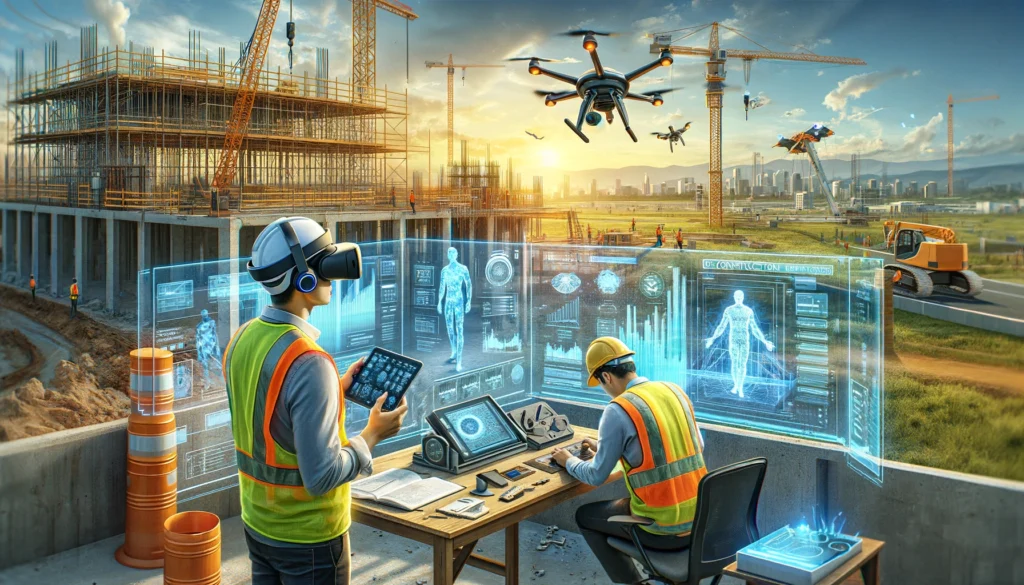
The construction industry is moving into a new age where AI in construction is not a far-fetched idea anymore; it is a reality. Indeed, as it is reported that more than 70% of construction companies will use AI tools by 2026, the urge to save money, increase efficiency and safety motivates them to do so. Artificial intelligence on construction site monitoring to AI-based estimating and planning software are only some of how technology is transforming the construction of a project. The firms implementing AI are not just constructing buildings because they are creating smarter, safer and more lucrative futures
Key Takeaways
- AI is changing the process of planning, implementation and monitoring of projects in the construction industry.
- Machine learning, computer vision, NLP, and robotics are some of the key technologies.
- AI is used to further predict, schedule, and model costs to plan projects smarter.
- AI for construction site monitoring enhances compliance with safety and real-time monitoring.
- Faster decision-making, cost savings and also AI-driven BIM collaboration are beneficial to the companies.
- Robotics, sustainability and predictive maintenance are some of the elements of AI that the future of AI in construction holds.
- The future of AI in construction including high prices, information security and the lack of skills.
- Estimating software, project management tools and construction safety monitoring are the best AI tools to use in building construction in the year 2026.
- Practical case studies demonstrate how AI helps to shorten the time of estimations, avoid injuries and accelerate construction projects.
- AI will not take the place of people, it will enable the construction teams to make safer, faster and smart.
Introduction
Take the example of a construction site where risks are anticipated in advance, the cost is estimated with almost perfect accuracy and the safety hazards are reported in real time. That is the power of AI in construction, a revolutionary change that changes the industry, which is one of the oldest in the world, into a smarter, safer and efficient space.
What Does AI in Construction Mean?
AI in construction implies that machine learning, computer vision, robotics and predictive analytics are complex technologies that are applied to put tasks on autopilot, process data and make smarter decisions. Unlike the traditional program, AI also develops according to the trends and develops in real-time, helping the construction teams to plan more efficiently, work safer and construct faster.
Why 2026 Is a Turning Point?
The construction industry fast fast-moving towards the adoption of AI in the year 2025. An increase in artificial intelligence in the construction industry has been developing at a very fast rate in 2026, and studies reveal that the market segment of AI in construction will grow to 8.6 billion dollars throughout the world by 2031. Companies that introduce AI will have an advantage in productivity, profitability and risk management.
The Demand for Efficiency, Cost Management and Safety
The need to be efficient and cost-controlled has never been greater than with together deadlines, shortages of labor and increased material costs. Simultaneously, safety is one of the primary concerns since construction is one of the most hazardous industries all over the world. By giving exact predictions, real-time site tracking and foretelling safety warnings, AI tools are resolving such issues in construction.
What You Will Learn in This Blog
In the following sections, we shall discuss:
- The fundamental AI technologies transforming construction.
- The role of AI in estimation, scheduling and project planning.
- The increasing presence of AI in site monitoring the construction sites in terms of safety and efficiency.
- The advantages, challenges, and best AI tools in the market today.
- Case studies and the future of AI in construction.
- At the conclusion, you will realize the reason why the future of the construction industry is not only digital but also AI-driven.
Understanding AI in the Construction Industry
The rise of AI in the construction industry is not just a fad but it is game game-changer. AI is changing the project design process, its monitoring and delivery through automated data analysis and prediction of intelligence. To appreciate its effect, we should consider the underlying technologies that make this move and what makes AI different from conventional construction software.
Core AI Technologies Used
- Machine Learning (ML): It analyzes the past data in the project to forecast the cost, schedules, and risks in the project with unparalleled precision.
- Computer Vision: It involves cameras and sensors that can be used to monitor the progress, identify safety hazards, and real-time material usage.
- Natural Language Processing (NLP): Transforms the complicated project information into clear and actionable reports to managers and teams on the field.
- Robotics: Drones to autonomous machines, AI-driven robotics are eliminating manual jobs and accelerating construction projects.
How AI Differs from Traditional Construction Software?
Conventional software assists teams in organizing data, but it is manual-based and requires human analysis. AI in the construction industry does not simply memorize information; it learns from it. Intelligent systems may anticipate possible delays and optimize operations and even suggest a solution before a problem gets out of control.
All these technologies are establishing a new level of efficiency, safety, and profitability in the construction industry.
AI for Construction Estimating and Project Planning
Among the strongest applications of artificial intelligence in construction is during the initial phases of a project. During which proper estimation and planning can result in profitability or its lack. Automation of repetitive tasks and data analysis of extensive amounts of data should assist in reducing errors made by contractors, accelerating the decision-making process and providing more plausible project results.
Automated Quantity Takeoffs and Cost Modeling
Taking off manually is slow and most likely to be erroneous but AI-based estimating systems are transforming the industry. AI can provide exact quantity takeoffs with computer vision and machine learning, immediately scanning digital blueprints to speed up estimation by up to 30-40%.
On top of speed, AI is cost modeling to the next level. It does not just use historical averages and instead uses market trends, material availability, and labor costs to give real-time data-based cost estimates. This will translate into to reduction of surprises, reduced budgets and increased client trust.
For more information about estimation read our blog: How to Estimate Construction Costs: Expectations, Benefits, and Tips
AI-Driven Scheduling and Timeline Optimization
Maintaining a schedule for a project is among the most difficult aspects of construction. The traditional tools of planning leave unseen risks out, whereas artificial intelligence in construction enables predictive analytics to streamline timelines optimally. AI-based scheduling programs can consider possible delays such as the shortage of labor, weather or supply chain interference and automatically propose the optimal course of action.
As an illustration, a delayed delivery can be recalculated immediately by AI, and the project sequence can be changed to reduce its downtime. The result? Less time wastage, fewer delays and more efficiency in the project to enhanced efficiency in the project would assist the contractors to save on time, money and satisfy the clients.
AI for Construction Site Monitoring
With the huge number of moving components within a busy job site, there is a possibility of risks, delays and expensive mistakes. That is why AI for construction monitoring is turning into an essential service of a contemporary contractor. Creating an integrated platform of real-time information and sophisticated analytics, AI ensures the safety and efficiency of the project and keeps it under control.
Computer Vision for Safety Compliance
One of the most important issues in the construction field is safety and it is in this area that AI becomes the most useful. Having the camera on the construction site under the control of AI and computer vision, it is possible to monitor helmet-wearing, safety vest or harness-covered workers in real-time. The system alerts violations on the fly and minimizes the threat of accidents and assists companies to adhere to high standards of OSHA.
PPE checks are not the only dangerous activities that AI detects as it can detect other dangerous actions like when employees are too near heavy machinery and in this case, the supervisors have a chance to avoid the accident before it takes place. It is a preventative step that will save lives and unnecessary project setbacks and lawsuits.
Transform Projects Through AI
Real-Time Monitoring of Equipment and Materials
Manually tracking materials and equipment can result in wastage, theft or lack of time. On the one hand, AI for construction site monitoring helps locate the exact position of equipment and supplies, monitor their state and use around the clock with the help of sensors and IoT devices.
Imagine being able to immediately know whether or not a crane is being underutilized, a delivery is late or materials are being misplaced onsite. AI sends real-time notifications and utilization records and enables managers to maximize resources and avoid downtime and reduce unnecessary expenses. The result? Sophisticated operation of the sites to enhanced productivity and high ROI among the contractors and clients.
AI-Powered Construction Site Monitoring Tools (2026)
| Feature | Technology | Key Benefits | Example Tools |
| Safety Compliance | Computer Vision | Detects PPE violations, unsafe behavior and restricted area access in real-time | Spot AI and Otive AI Cameras |
| Real-Time Site Monitoring | AI Video Analytics | Provides 24/7 surveillance with smart alerts for unauthorized access or equipment misuse | Sirix Monitoring and Pro-Vigil |
| Hazard Detection | AI-Powered Inspection Tools | Identifies structural defects, material inconsistencies and safety violations | OpenSpace, Nextera AI |
| Robotic Site Surveillance | Autonomous Drones & Robots | Performs aerial site inspections and oversees inaccessible places to determine the safety compliance. | LocoRobo and Reconstruct AI |
| Predictive Maintenance | AI-Driven Analytics | Anticipates failures and makes maintenance plans to avoid failure. | Buildots and Actus X |
Benefits of AI Tools for Construction Companies
The modern construction site is hectic, data-intensive and busy. That is why AI tools for construction are not a luxury anymore, as companies wishing to remain ahead of competitors need them. AI is assisting companies that want to stay ahead of competitors in need. AI is helping companies to create quicker, safer and more efficiently and making smarter decisions.
Faster Decision Making and Data-Driven Insights
In the current day, project decisions have to be made on the fly. Construction AI devices handle large volumes of data including the plans of the project and the site conditions and give us practical information in real-time. Predictive intelligence enables managers to foresee any delay, decide resource allocation in the most efficient way, and base decisions on predictive intelligence, but not on guesswork. The result is the fast and smart decision-making that keeps the projects on schedule and customers satisfied.
Cost Savings Through Predictive Analytics
One of the points of pain in construction is budget overruns. With the help of AI tools for construction, firms can predict costs and inefficiencies and avoid waste by relying on predictive analytics. Budget overruns are one of the construction sore points. Through the use of AI tools to construct, companies are able to anticipate expenditures and inefficiencies and prevent waste, which relies on predictive analytics. Using AI as an example, it is possible to predict potential material shortages or equipment malfunction and make timely changes that can result in the savings of thousands of dollars per project. Predictive insights do not only ensure that the costs are kept down but also the profitability of a project is generally improved.
Enhancing Collaboration with AI-Powered BIM
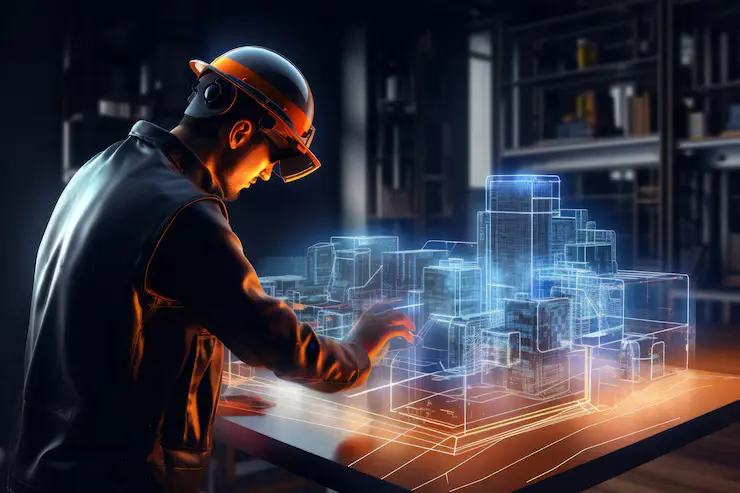
Work synergy is important where two or more teams are involved in a given project. BIM systems based on AI enable designers, engineers and contractors to collaborate effectively. AI detects conflicts, automatic updates and has everybody on the same page with the current project data. Errors are reduced, timelines are minimized, and the results of a project are improved, and AI tools for the construction sector are extremely important to any modern team.
Future Construction: How AI Will Shape the Next Decade
The future of AI construction will bring about the redesigning of the way projects are designed, constructed and maintained. With the growth in technology, AI among construction companies will be adopted not only to be efficient but also to be safe, sustainable and smart infrastructures as never before.
AI and Robotics for Automated Building
Think of a world where robots would lay bricks, pour concrete and put up buildings without human involvement. The future of AI in the construction industry involves high-level robotics that would work together with humans in performing repetitive, risky or extremely delicate duties. This minimizes and removes the risks associated with labor, shortens time schedules and enables employees to concentrate on high-value tasks for making construction projects much faster and safer.
Sustainable Construction with AI Optimization
Sustainability is no longer a choice but a requirement. AI will streamline and maximize energy consumption, materials and waste management to make construction more cost-effective and green. Predictive models and allocation of resources based on AI will allow companies to achieve carbon footprint reductions, lower energy expenses and more demanding environmental requirements. This is the future where the work of construction is in tandem with the environment.
Predictive Maintenance and Smart Infrastructure
Infrastructure management is also another area where AI can find its future in the field of construction. The predictive algorithms and smart sensors can monitor buildings, bridges, and roads and determine when they require maintenance before their failure. It is a proactive approach that saves a company the only costly downtime, increases asset life and creates safer and more reliable infrastructure for both communities and businesses.
Global Outlook for AI Adoption in 2030
The use of AI in construction will be prevalent in all the continents by the year 2030, with the largest markets in North America, Europe and Asia being the first to move on AI. The firms that do not adopt AI are at risk of lagging behind in terms of efficiency, safety and competitiveness. The future of AI in the construction sector is a world where data-driven decision making, automation and environmentally friendly practices become the norms that change the entire situation in the industry.
Challenges of AI in Construction
Although the future of AI in the construction industry is revolutionary, it is not without its challenges. To maximize the opportunities of AI technologies, contractors and project owners have to overcome high prices, risks in data security and skill gaps in the workforce. Realizing these difficulties is important to he successful implementation of AI.
High Implementation Costs
The cost of AI in construction involves a massive investment in software, hardware and networking devices. Efforts to develop sophisticated sensors and even autonomous equipment may require significant initial expenses, which may be unaffordable to smaller and mid-sized companies. Nevertheless, efficient companies tend to have long-term ROI by saving money by becoming efficient, making fewer mistakes and having better project outcomes.
Data Security and Privacy Concerns
The AI systems are based on enormous amounts of data from projects such as designs, schedules, and data about employees. This brings up the issues of data security and privacy since breaches or unauthorized access may result in expensive delays and compliance. Adoption of AI in construction by companies requires the implementation of powerful cybersecurity practices and safe cloud systems.
Skills Gaps and Training Needs
There is more to AI in construction than just technology, and it has more to do with people. There are not enough construction teams that are familiar with the technical expertise of using AI tools. The gap in skills will need to be bridged through training programs, upskilling of the staff, and sometimes hiring AI specialists. Companies that invest in staff development have a competitive advantage, and their AI systems can provide the utmost value.

Best AI Tools for Construction Teams in 2026
Artificial intelligence in construction is no longer a luxury in 2026, and it is a must-have for companies that need to remain competitive. The correct use of AI in construction is reflected in estimating correctly, project management, safety and robotics, which all help save time, cut costs, to enhance the total performance of a project.
AI Estimating Software
Any successful project is based on estimating. The quantity takeoffs, cost modeling and bid preparation are automated with the help of AI and have fewer human errors and accelerated the workflow. These tools will offer predictive analytics that will provide data-driven cost projections to enable the contractors to plan with confidence.
AI Scheduling and Project Management Tools
Staying on Schedule with a project is difficult. In contrast, AI-based project management systems can streamline schedules through dependency analysis, delay prediction and additional recommendations. These construction AI systems keep the teams on track and the projects complete on time, even in complicated situations.
Safety and Monitoring Platforms
The safety of the workers is the main concern at any construction site. AI tools for construction based on computer vision and IoT sensors can be used to ensure that the safety measures are followed, identify hazards and send notifications in real-time. Such platforms will avoid accidents and enhance regulatory compliance, and secure both workers and project schedules.
Robotics and Automation Tools
Robotics can be operated via artificial intelligence in construction by performing repetitive and risky projects such as bricklaying, excavation and transportation of materials. Automation not only speeds up construction but also makes it more accurate and minimizes risks associated with labor to make workplaces safe and more efficient.
Top AI Tools for Construction Teams (2026)
| Category | Function | Popular Tools | Key Benefits |
| Estimating Software | Quantity takeoffs and cost modeling | Buildots and PlanSwift, ProEst | Accurate bids, faster estimating and reduced errors |
| Scheduling & Project Mgmt | Timeline optimization and workflow management | Primavera P6, Buildertrend and Autodesk Build | On-time delivery, predictive scheduling and improved coordination |
| Safety & Monitoring Platforms | PPE compliance, hazard detection and site monitoring | SmartSite, OpenSpace and HoloBuilder | Safer job sites, real-time alerts and regulatory compliance |
| Robotics & Automation Tools | Autonomous machinery and automated construction tasks | SAM100, Construction Robotics and Boston Dynamics Spot | Faster builds, reduced labor risks and higher precision |
Real World Case Studies of AI in Construction
Construction is not just about hard hats and blueprints; AI in the construction field is already proving its worth in real-world processes and prompting efficiency, safety, and productivity as never before. We shall look at how leading firms are using these technologies to revolutionize their operations.
AI Reducing Estimation Time by 30%
Consider that the manual takeoffs, which took days to complete, can now be done within hours. The construction major companies adopting AI may create estimates with high accuracy within 30% timeframes, minimizing errors and giving teams an opportunity to submit bids at a high rate, win more projects, and make informed decisions that may be regarded as reliable.
Computer Vision Preventing Site Injuries
AI for construction site monitoring is transforming the game because safety is a priority on construction sites. Unsafe behaviour, the absence of PPE, or dangerous situations are now identified in real time by the computer vision systems. A single instance of this has shown that AI-based monitoring could assist a large commercial project to reduce site injuries by 25%, offer managers immediate notifications and actionable suggestions to ensure workers are safe.
Robotics Speeding Up Infrastructure Projects
Robotics and AI automation tools are transforming the infrastructure megaprojects and starting with robotized bricklaying robots to robotized concrete pouring. The time-consuming projects are now finished in weeks before the scheduled time. An example is a highway construction project that used robotics powered by AI to perform repetitive tasks, significantly 20% reducing the time it took to build the highway. Human fatigue was reduced, and quality was improved.
These case studies indicate that AI in the construction business is not only a futuristic one, but it takes place today, and it saves time, costs and improves safety at all levels of construction.
Conclusion: Why the Future of Construction is AI-Powered
AI is the future of construction, and its advantages are obvious. AI in construction has enabled companies to work more efficiently, cut costs and make confident decisions based on data rather than on guesses and implementation of slower project estimation and optimization of the Schedule, increased safety and even more intelligent resource management. The possibilities of innovation are enormous, not to mention robotics, computer vision or predictive analytics, AI is changing every sphere of construction.
Notably, AI does not remove human knowledge but supplements it. The field workers, project managers and engineers continue to be very important in the interpretation of insights, making complex decisions and quality outcomes. Their skills are enhanced by AI and the teams can invest their time in strategy, creativity and problem-solving rather than doing the same tasks.
Want to have the strength of AI in construction? Try our AI-based construction estimating services now and discover how the latest technology can make your projects easier to manage and more exact, and give your team an advantage.
FAQ
What is the biggest benefit of AI in construction?
The biggest benefit of AI in the construction industry is its capability to enhance efficiency and precision in all the phases of a project. Automated estimating and cost modeling, predictive maintenance and safety monitoring and saving time, avoiding errors and controlling costs, as well as making smarter decisions, can be achieved with the help of AI to improve the overall project results.
Is it possible to use AI tools for construction by small contractors?
Absolutely! Artificial intelligence is no longer the prerogative of huge corporations. Numerous platforms provide cheap AI solutions to small contractors, such as estimators, project scheduling applications, as well as site monitoring applications. Through the implementation of AI, small teams will be able to compete at a higher level, produce projects at a higher rate and minimize expensive errors.
How is AI used for construction site monitoring?
AI is improving security and efficiency at the sites with the help of computer vision and real-time monitoring. AI-powered cameras and sensors will be able to identify unsafe behavior, the use of equipment, and identify hazards in real-time. It not only avoids accidents but also enhances the management of the workflow, which enables teams to respond promptly to possible problems.
Will AI replace project managers in the future?
No, AI in construction is not a replacement for project managers because it is an addition. AI replaces repetitive processes and offers predictive insights and optimizes workflows, but human expertise is needed in decision making, strategy and problem solving. By relying on AI, project managers will be able to focus on a higher level of planning and supervising which results in better quality and efficiency of a project.
